Mic Check: The Hidden Comms Advantage That's Deciding Multiplayer Matches in 2026

Photo: Marc Lee, CC BY-SA 4.0, via Wikimedia Commons
Mic Check: The Hidden Comms Advantage That's Deciding Multiplayer Matches in 2026
You built a great loadout. Your aim is sharp. Your game sense is decent. You queued up, played your heart out, and still got rolled by a squad that, by all visible metrics, shouldn't have beaten you. You reviewed the match. The enemy team wasn't mechanically superior. They weren't running some broken meta build you hadn't discovered yet. They were just... coordinated. They rotated together. They called out positions. They stacked the right engagements at the right times. And they did it using communication tools built directly into the game that you'd never once opened.
Welcome to the most underrated competitive edge in multiplayer gaming right now: the comms loadout. And in 2026, the gap between players who use it and players who don't is wider than almost any mechanical skill difference you could name.
The Slot Nobody Equips
Every serious multiplayer game ships with some form of communication infrastructure. Voice chat, ping systems, quick-comms wheels, proximity audio, map marking tools — the feature set varies by title, but the intent is consistent: give players the tools to coordinate without requiring them to be on a private Discord. These systems exist. They work. And a stunning percentage of American solo-queue players treat them like a UI element to be minimized and ignored.
The reasons are understandable. Voice chat in random lobbies has a reputation — one that was earned over years of genuinely unpleasant experiences. Toxicity, harassment, background noise, and the general chaos of stranger-danger comms turned a lot of players into mute-everything-on-arrival types. That habit stuck. Even as in-game communication tools became significantly more sophisticated and moderated, the cultural reflex to disengage from them remained.
The result is a structural asymmetry that plays out in ranked lobbies every single day. Coordinated teams — whether pre-formed groups or random players who simply engage with the comms tools — consistently outperform mechanically equivalent solo players who are operating in information silence. Not because they're better at the game. Because they're playing a version of the game with more data.
What Good Comms Design Actually Looks Like
The evolution of in-game communication tools over the past few years has been genuinely impressive, and 2026 represents something close to a maturity point for the design conversation. The old binary — voice chat or nothing — has been replaced by layered systems that let players communicate at whatever depth they're comfortable with.
Ping systems, pioneered in mainstream consciousness by Apex Legends and subsequently adopted across virtually every major multiplayer release, are the gateway layer. A single button press communicates location, intent, threat, or resource status without any voice interaction required. Done well, a ping system lets a completely silent player participate meaningfully in team coordination. Done poorly — with too few ping options, bad contextual reading, or clunky input — it becomes noise that experienced players learn to ignore.
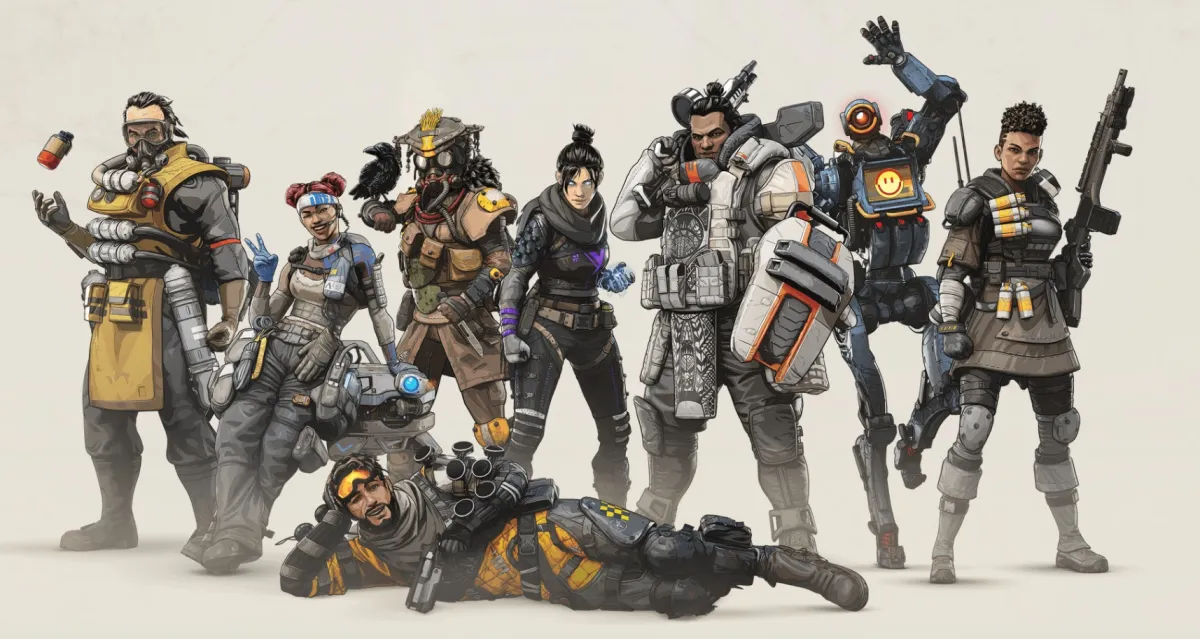 Photo: Apex Legends, via images.gamewatcherstatic.com
The titles leading this space in 2026 have moved beyond basic pings into what designers are calling "intent broadcasting" — systems where the game infers from your actions what you're likely about to do and communicates that to teammates automatically. Rotating toward an objective? Your teammates see a movement indicator. Pushing an engagement? A brief callout appears on their HUD. None of this requires manual input. All of it reduces the information gap between solo players and coordinated teams.
Proximity voice chat — spatial audio that lets you hear enemy players when they're physically near your character in the game world — is having a particular moment in survival and extraction genres, where the psychological dimension of hearing an enemy before you see them adds a layer of tension and tactical depth that no other system replicates. Games leaning into this feature in 2026 are generating some of the most discussed multiplayer moments in the community.
The Solo-Queue Tax
For American players who primarily play solo — which, by most platform data, is the majority of multiplayer participants — the comms gap has a real competitive cost. Ranked modes in particular punish coordination failures harshly, and coordination failures are disproportionately likely when five strangers are each making decisions in informational isolation.
The math is uncomfortable. A team of average players sharing good information will beat a team of above-average players sharing none, more often than most people want to admit. Mechanical skill has a ceiling in terms of its competitive leverage. Communication compounds. Every piece of information shared creates better decisions, and better decisions stack across a match in ways that individual outplays can't consistently overcome.
This is the hidden loadout slot. It doesn't show up in your equipment screen. It doesn't have a rarity tier or a stat line. But players who equip it — who engage with ping systems, who use voice chat selectively and constructively, who read and respond to teammate intent signals — are running a fundamentally different build than the ones who don't.
How Studios Are Nudging Players Toward Comms
The design challenge is obvious: you can't force communication, and trying to usually makes it worse. Heavy-handed requirements to use voice chat or mandatory ping acknowledgments create friction that drives players away from the feature entirely. The studios navigating this well in 2026 are using incentive structures instead of mandates.
End-of-match performance breakdowns that include communication metrics — assists generated by pings, successful callouts, intent broadcasts acted upon — make the value of comms visible in the same way kill/death ratios make mechanical performance visible. When players can see that their coordinated matches result in higher performance scores, the behavior reinforces itself.
Some titles are experimenting with cosmetic rewards tied to communication milestones — not pay-to-win advantages, but visible acknowledgments that a player is a good teammate. In a culture where social signaling within games matters enormously, this kind of soft incentive structure has real pull.
The Competitive Ceiling You're Not Hitting
Here's the honest take for any American multiplayer player reading this: if you're frustrated by your ranked ceiling, and you're not engaging with your game's communication tools, you've found your problem. Not your aim. Not your loadout. Not the meta. The information layer you're not participating in is costing you matches that your mechanics should be winning.
The good news is that unlike mechanical skill, communication tools don't require hours of aim training or build theorycrafting to use effectively. They require exactly one thing: the willingness to engage with a system you've been ignoring. Open the ping wheel. Use the quick-comms menu. Try proximity voice for one session. The competitive return on that investment is immediate and measurable in a way that grinding mechanical skill rarely is.
The comms loadout is the most accessible upgrade in competitive gaming right now. Most players just never equip it.
The bottom line: In 2026's multiplayer landscape, communication tools aren't a nice-to-have feature — they're a competitive loadout slot, and the players treating them that way are winning matches the silent majority can't figure out how to take back.