Midnight Drop, Morning Patch: The Day-One Update Is Breaking What 'Launch Day' Even Means
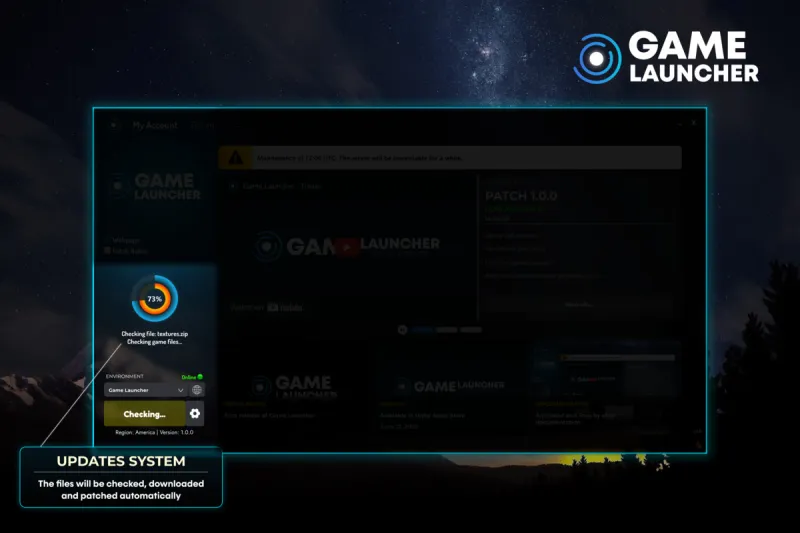
Photo: game update download patch official, via assetstorev1-prd-cdn.unity3d.com
Midnight Drop, Morning Patch: The Day-One Update Is Breaking What 'Launch Day' Even Means
You know the drill. Midnight unlock. You've had the game preloaded for three days. You hit play, and immediately — a download prompt. Not a small one. We're talking gigabytes. Sometimes double digits. You sit there watching a progress bar at 12:03 AM wondering whether you're downloading the game you paid for, or the game the studio actually wanted to ship.
In 2026, the answer is almost always the latter. And that distinction matters more than the industry wants to admit.
The Patch That Ships the Game
Day-one patches aren't new. They've been a fixture of console gaming since the Xbox 360 and PS3 era, when internet connectivity first made post-launch updates feasible. But what started as a mechanism for squashing last-minute bugs has quietly evolved into something far more significant: a second ship date that often fundamentally changes the product consumers were sold.
The pattern is consistent enough to be a trend. A game goes gold — meaning it passes certification and is ready to manufacture or distribute — weeks before its release date. In that window, the development team keeps working. Balance changes get made. Performance issues get addressed. Sometimes entire systems get reworked based on review feedback from the press embargo period. By the time the game unlocks for regular players, the version sitting on the disc or in the initial download package may be meaningfully different from the version that's actually playable.
Reviewers are often caught in the middle of this. Most outlets receive review code ahead of launch and are bound by embargo dates. If the day-one patch drops after reviews go live — which it often does — those reviews are technically assessing a version of the game that no paying customer will ever actually play.
When the Patch Changes the Game
Let's be specific about what "fundamentally changes" can mean in practice, because it covers a wider range than people realize.
At the lighter end, you have performance patches — frame rate stabilization, resolution fixes, HDR calibration. Annoying that these weren't in at launch, but the game is still recognizably the same experience. At the heavier end, you have patches that alter enemy AI behavior, rebalance weapon damage across entire categories, change the economy of progression systems, or — in documented cases — unlock content that was technically on the disc but gated behind a server-side switch. The game on the storefront was always going to need that patch to be complete. The launch version was, functionally, a placeholder.
This isn't a hypothetical concern. High-profile releases in recent years have shipped with day-one patches that reviewers specifically noted changed their experience relative to what paying players would encounter at launch. When a publication's 9/10 review is based on a version of the game with different enemy spawn rates, different loot drop tables, or a different frame rate profile than the version in players' hands, that review has a validity problem — and consumers are the ones paying for it.
The Disc Is a Legal Fiction
For physical game buyers, this situation has a particular edge to it. The disc in the box is increasingly a formality — a legal artifact that satisfies the requirement that a product was delivered. The actual game, the one that works as intended, is on a server somewhere waiting to be downloaded on top of it.
This creates a strange consumer reality. You've paid full price — $70, sometimes more for deluxe editions — for a product that is explicitly incomplete at the moment of purchase. The completion of that product is contingent on having a stable internet connection, sufficient storage space, and the time to wait for a download that the publisher scheduled without your input.
For players in rural America with slower internet, or players who bought a physical copy specifically to avoid large downloads, this isn't a minor inconvenience. It's a quiet breach of the implicit contract that buying a game used to represent.
The Review Embargo Problem
The games press deserves some scrutiny here too, because the day-one patch problem is partly sustained by how reviews work.
Most major outlets publish reviews at embargo lift, which is typically before or at launch. If the day-one patch drops simultaneously with the embargo — or, more problematically, after it — reviewers are publishing assessments of a version of the game the public will never access. Some outlets add patches to their reviews noting that a day-one update was applied after publication. But that update is often buried below the score, which is what gets aggregated on Metacritic and what publishers use in marketing materials.
The system creates an incentive for publishers to hold significant patches until after reviews are locked, then ship them alongside launch. The review captures the best-case version of the game. Players get whatever the actual day-one build delivers. The score stands.
What 'Release' Actually Means Now
In software development more broadly, the concept of a "release" has been fluid for years. Web applications update continuously. Mobile apps patch weekly. But games have historically maintained a stronger cultural connection to the idea of a finished product — something complete and intentional at the moment it reaches you.
That idea is being quietly retired, and the industry isn't being particularly transparent about it. Publishers don't announce that the version launching at midnight is not the intended final version. They don't disclose in pre-order listings that a mandatory patch will be required before the game functions as reviewed. The day-one patch is treated as a normal operational detail rather than what it often is: an admission that the product being sold isn't ready.
What Players Can Actually Do
Practically speaking, the advice is simple and unsatisfying: wait. The players who get the most stable, complete experience are almost never the ones who played at midnight on launch day. They're the ones who waited a week, let the patches stack, read the post-launch coverage, and downloaded a version of the game that more closely resembles what the developers actually intended.
The midnight launch is a ritual. It's exciting. It's part of gaming culture. But in 2026, it's also the moment you're most likely to be playing an unfinished product. The game you actually want to play usually shows up a few days later, quietly, without an announcement.
The loadout on the box and the loadout in the patch notes are two different things — and only one of them is real.