The Merchant Meta: Why the Most Important Character in Your RPG Is the One Selling You Stuff

You've just cleared a brutal dungeon. Your build is coming together. You've got the stats, the synergies, the skill allocation dialed in. And then you open the vendor screen of some minor faction merchant tucked into the corner of a map zone you almost didn't bother visiting — and there it is. The piece of gear that makes your entire setup click. The spell you didn't know existed. The crafting material that unlocks the weapon variant you've been theorycrafting since hour three.
If you've played a serious RPG in the last five years, you know this moment. And if you're paying attention, you'll notice that it keeps happening — not at the end of a raid, not as a story reward, but in a shop. In a conversation. With an NPC whose name you'll forget by next session.
The merchant meta is real, it's been growing for years, and it's quietly reshaping what it means to build a character in modern role-playing games.
From Potion Vendors to Power Brokers
Go back to the classic JRPG era and the village shop was a pit stop, not a destination. You bought your potions, maybe grabbed a new sword if the numbers were higher, and moved on. The vendor existed to resupply you between the real content — the dungeons, the bosses, the story. The shop was infrastructure, not gameplay.
That relationship started shifting in the PS2 era, as RPGs grew more mechanically complex and loot systems became more granular. But the real inflection point came with the FromSoftware model. Dark Souls made merchant NPCs into characters — Domhnall of Zena, Patches, Shiva of the East — with inventories that expanded based on your actions, locations that changed based on story progress, and items that were, in some cases, entirely unique to their specific vendor. If you missed Griggs of Vinheim's quest chain, you missed spells that weren't available anywhere else in the game. The shop wasn't a convenience. It was content.
 Photo: Patches, via www.montereycompany.com
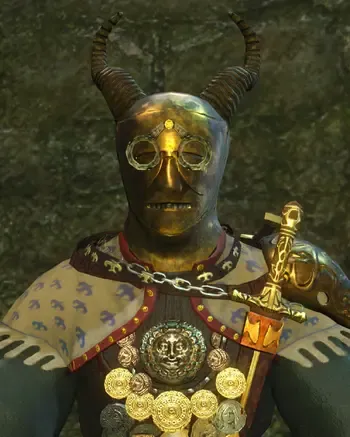 Photo: Domhnall of Zena, via static.wikia.nocookie.net
Elden Ring and the Vendor as Gatekeeper
Elden Ring pushed this philosophy to its logical extreme in the open-world format, and the result fundamentally changed how serious players approach the game. Enia at the Roundtable Hold. Gowry in his shack. Seluvis with his puppet questline and the sorceries locked behind it. These aren't peripheral characters you visit once for a trinket. They're nodes in a build ecosystem, and knowing which ones to prioritize — and in what order — is one of the most important pieces of knowledge separating a casual playthrough from an optimized one.
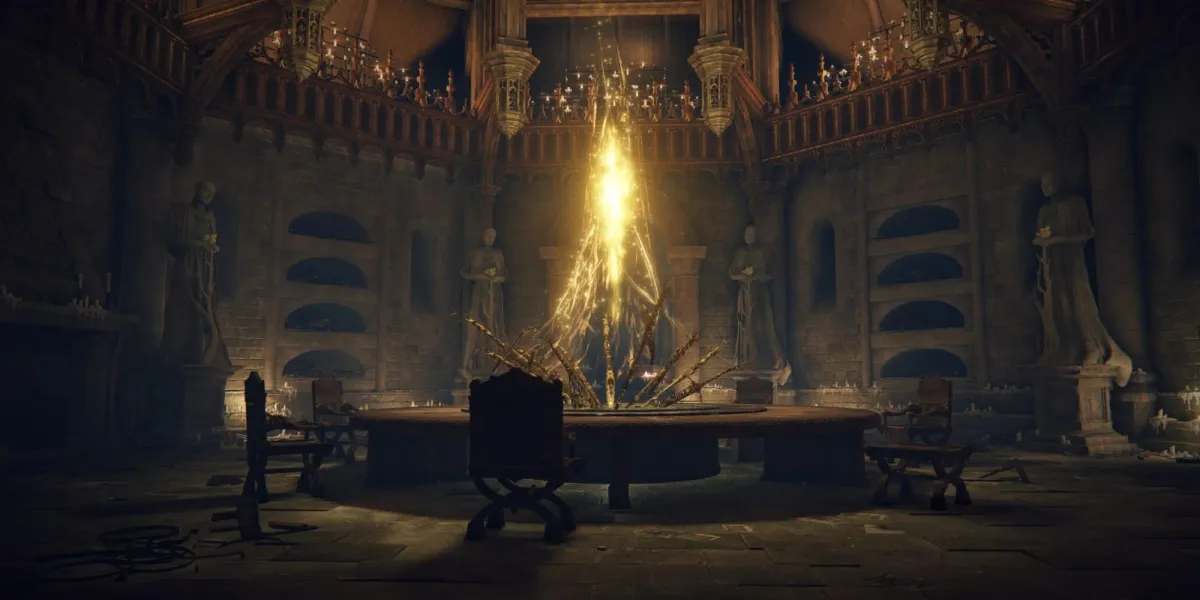 Photo: Roundtable Hold, via static1.thegamerimages.com
The community response to this design was immediate and telling. Within weeks of Elden Ring's launch, the most-viewed content on YouTube and the most-upvoted posts on r/EldenRing weren't about boss fights. They were about vendor locations. Merchant questlines. The specific dialogue triggers that unlock new inventory items. Players weren't just mapping the world — they were mapping the economy.
Baldur's Gate 3 and the Companion Commerce Layer
Larian Studios took the concept in a different direction with Baldur's Gate 3, layering companion relationships directly into the commercial ecosystem. Your companions aren't just party members — they're build components. Astarion's skills affect what you can steal and from whom. Shadowheart's approval rating changes what support options she'll willingly provide. Halsin's presence in your party opens dialogue paths that unlock quest rewards unavailable through any other route.
But it's the vendor economy in BG3 that really rewards deep engagement. Dammon the tiefling smith, for instance, is easy to miss entirely — and if you do, you lose access to some of the best infernal armor upgrades in the game. Dame Aylin's questline gates content that has direct mechanical implications for certain builds. The game's faction system determines which merchants you can even access, meaning your early story choices are quietly shaping your late-game build options in ways the UI never explicitly tells you.
This is the design philosophy at its most sophisticated: the NPC economy isn't separate from the RPG system. It is the RPG system, running underneath the combat and the narrative like a hidden layer most players never fully see.
The Information Economy
What's interesting about this shift is that it's created an entirely new category of player knowledge. In older RPGs, the premium information was mechanical — damage formulas, stat breakpoints, ability interactions. In modern games built around the merchant meta, the premium knowledge is relational. Who sells what. When they sell it. What you have to do — say, complete, or avoid — to keep that option open.
This is why RPG wikis have become so encyclopedic around NPC questlines and vendor inventories. It's why content creators who specialize in "hidden merchant" and "missable items" videos consistently outperform straightforward build guides in view counts. The audience understands, intuitively, that the real edge isn't in the skill tree. It's in knowing where to shop.
For developers, this creates a genuinely compelling design opportunity. If the vendor ecosystem is where players are spending their most engaged attention, it becomes a space to embed lore, characterization, and systemic depth that rewards curiosity without punishing players who don't seek it out. The best implementations — FromSoftware's, Larian's — manage exactly this balance.
The Missed Conversation Problem
The risk, of course, is that this design philosophy creates a class of content that's functionally invisible to a large portion of your audience. Most players don't read every dialogue option. Most players don't check back with vendors after major story beats. Most players, by the studios' own internal data, miss significant portions of the content that's been built for them.
When that content is a side quest, the loss is narrative. When it's a vendor unlock that gates a core build component, the loss is mechanical — and it can quietly undermine the entire experience for players who don't know what they're missing.
The solution isn't to make everything obvious. Obscurity and discovery are legitimate design tools, and some of the most memorable moments in modern RPGs come from stumbling onto something you weren't supposed to find yet. But there's a meaningful difference between rewarding exploration and silently punishing players for not reading a guide.
The Real Meta Lives in the Conversation
Here's the bottom line: if you're playing a modern RPG and you're skipping NPC dialogue, rushing past vendor screens, and ignoring faction questlines, you're not playing the full game. You're playing the surface of it. The actual build meta — the items, the synergies, the gear that makes your setup sing — is often sitting in a shop attached to a character you talked to once and forgot about.
The merchant meta isn't a bug in modern RPG design. It's increasingly the feature. And the players who understand that are running builds everyone else thinks are impossible.