You Paid for It. Now It's Gone: The Digital Storefront Graveyard and the Ownership Crisis Nobody in Washington Is Talking About

Photo: dronepicr, CC BY 2.0, via Wikimedia Commons
You Paid for It. Now It's Gone: The Digital Storefront Graveyard and the Ownership Crisis Nobody in Washington Is Talking About
In January 2023, Google Stadia shut down. Players who had spent hundreds of dollars building a library of games received refunds for hardware and software purchases — a relatively clean ending by the standards of what usually happens when a digital storefront closes. Google, facing a PR disaster and a potential legal headache, did the right thing. Mostly.
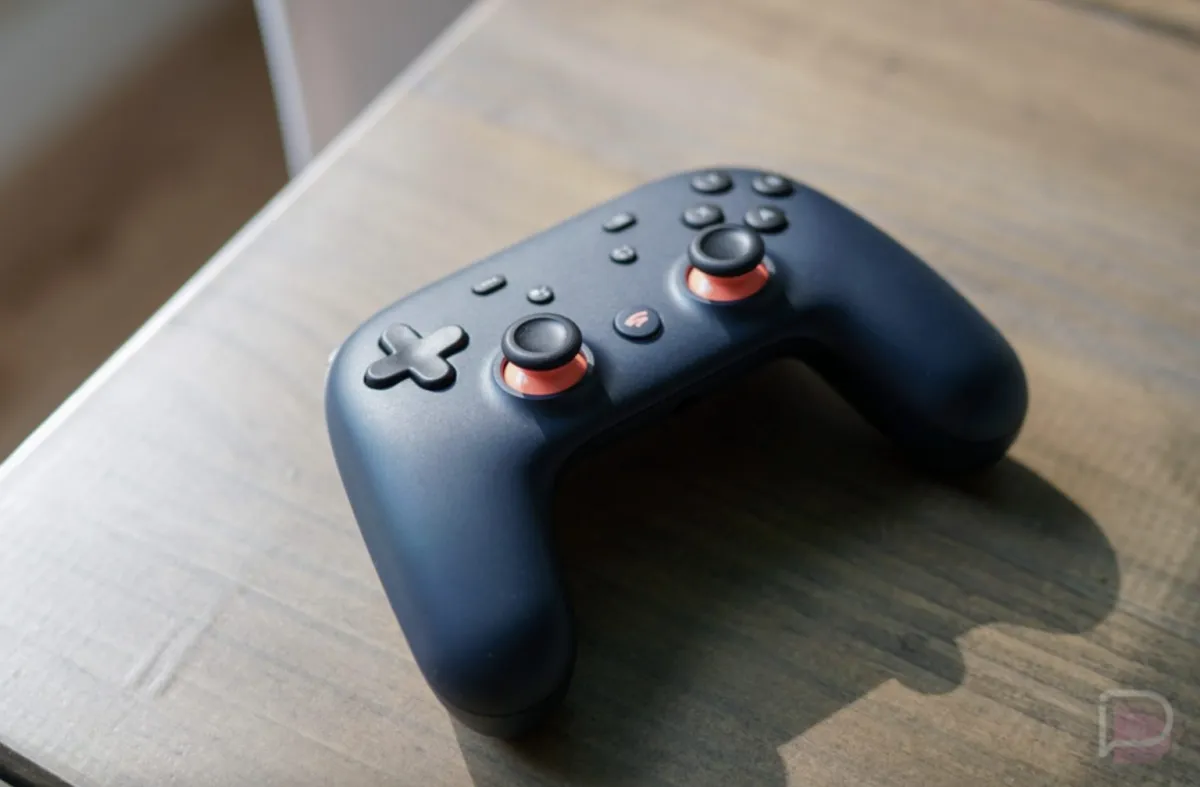 Photo: Google Stadia, via www.droid-life.com
But Stadia was the exception. Across the broader history of digital game distribution, the more common outcome when a platform dies is considerably less tidy. Your purchases go with it. Your recourse is limited. And the legal framework that was supposed to protect you as a consumer was written for a world where 'buying' something meant you actually owned it.
We are now deep into a world where that assumption no longer holds.
The Graveyard, Mapped
Let's be specific about the scale of what's already been lost.
The Wii Shop Channel closed in 2019, taking with it a library of WiiWare and Virtual Console titles that have never been fully re-released. Nintendo offered no refunds and no migration path for purchased software. If you'd spent money on games that existed only on that platform, that money was gone.
 Photo: Wii Shop Channel, via static0.gamerantimages.com
The PlayStation Store for PS3, PSP, and PS Vita was briefly scheduled for closure in 2021 before Sony reversed course following significant public backlash. That reversal was notable precisely because it was unusual. The stores remain technically accessible for now, but Sony has made no long-term commitment to their survival, and the infrastructure supporting them is aging visibly.
In the mobile space, the situation is considerably worse and far less covered. Apple and Google have both quietly removed thousands of titles from their respective stores over the years — sometimes for licensing reasons, sometimes because a developer folded, sometimes for policy compliance issues that had nothing to do with the game itself. Titles that players paid for, sometimes repeatedly across devices, simply ceased to exist in any accessible form. There was no announcement. No refund. No explanation beyond a missing icon.
Microsoft's Games for Windows Live platform, which required an internet connection to access games players had purchased, became effectively unusable for large portions of its library after the service degraded. Some developers patched their games to remove the dependency. Many didn't.
The list is long, and it keeps growing.
What You Actually Own (Spoiler: It's Less Than You Think)
The legal reality of digital game purchases in the United States is uncomfortable to sit with once you understand it clearly.
When you 'buy' a game on Steam, the PlayStation Store, the Xbox marketplace, or virtually any other major digital platform, you are not purchasing the game. You are purchasing a license to access the game under the terms and conditions of that platform's end-user license agreement. Those terms, which almost nobody reads and which are written entirely by the platform operator, typically include language that allows the platform to revoke or modify access at any time.
This is not a secret. It is disclosed. It is also buried in thousands of words of legal boilerplate that the FTC has shown no meaningful interest in reforming, that Congress has not legislated around, and that consumer protection organizations have largely failed to challenge successfully in court.
The EU has moved further on this issue than the US. European consumer protection frameworks have forced some platforms to be more explicit about the distinction between ownership and licensing, and there have been enforcement actions that resulted in clearer disclosures. In America, the market has essentially self-regulated — which is to say, it has not regulated itself at all.
The Digital-Only Horizon Makes This Worse
Here's where the stakes escalate significantly.
Microsoft has already released a disc-free Xbox console. Sony released a disc-less PS5 model. The industry's direction of travel is unmistakable: physical media is being phased out, and digital distribution is the future the major platform holders are actively building toward.
For consumers, this means the theoretical ability to maintain a library through physical ownership — already limited, already declining — is being systematically removed as an option. If you want to play games on a major console in 2030, you will almost certainly be doing so through a digital storefront or a subscription service. The license model will be, for most players, the only model.
And subscription services introduce their own layer of impermanence. Games added to Xbox Game Pass or PlayStation Plus are regularly removed. You do not own those games. When they leave the service, they leave your library. If the service itself closes — and services close; this is not a hypothetical — the entire library goes with it.
The question of what American gamers will actually own in ten years is not a philosophical one. It has a practical answer, and the answer is: probably not much.
The Quiet Wealth Transfer
There's a framing for this issue that doesn't get used enough, and it's the most honest one available: this is a wealth transfer.
Every time a storefront closes and takes purchased libraries with it, money that consumers spent in good faith is effectively retained by the platform operator. The transaction is complete on their end — they received payment. The consumer's side of the transaction, access to the purchased content, is terminated. The money does not come back.
Across the entire history of digital game distribution, the cumulative value of purchases lost to storefront closures, license terminations, and server shutdowns almost certainly runs into the billions of dollars. It's genuinely difficult to calculate because nobody is required to disclose it. But the individual stories are everywhere: the player who spent $400 on a digital Xbox 360 library that became inaccessible when Microsoft changed backward compatibility terms. The mobile gamer who rebuilt their collection across three devices only to find half their purchases were no longer available for download. The Stadia adopter who got lucky because Google blinked.
Most people who lost money in these situations did not get it back. Most of them had no legal mechanism to pursue it.
What Comes Next
There are organizations pushing for reform. The Video Game History Foundation has been vocal about preservation and access issues. Various consumer advocacy groups have raised digital ownership concerns with the FTC. And there's a slowly growing body of legal scholarship arguing that the current EULA framework, as applied to digital goods, may not survive serious constitutional scrutiny under existing consumer protection law.
 Photo: Video Game History Foundation, via d1lss44hh2trtw.cloudfront.net
But legislative action in Washington on this specific issue remains essentially nonexistent. It's not a campaign issue. It's not generating the kind of constituent pressure that moves congressional offices. And the platforms that benefit from the current framework have every incentive to keep it exactly as it is.
For now, American gamers are largely on their own. The practical advice — keep receipts, maintain physical media where possible, be skeptical of platforms with uncertain futures — is real but insufficient. It places the burden of protection entirely on the consumer in a market where the information asymmetry heavily favors the seller.
The server will go dark again. It's only a matter of which one, and when. And when it does, the games you bought will go with it — quietly, legally, and with almost no one in a position of power paying any attention at all.