The Last-Hit Loadout: Why the Final Boss in America's Biggest RPGs Is Always Designed to Punish the Build You've Been Running All Game
The Last-Hit Loadout: Why the Final Boss in America's Biggest RPGs Is Always Designed to Punish the Build You've Been Running All Game
You've spent 80 hours perfecting your stealth archer build in Skyrim. You've min-maxed every stat, collected every piece of gear, and can take down dragons from half a mile away without being detected. Then you reach Alduin, and suddenly your carefully crafted playstyle becomes almost useless against a boss that forces direct confrontation.
Sound familiar? Welcome to the final boss paradox that's been plaguing American RPG design for over a decade — the seemingly intentional decision to make climactic encounters that directly counter whatever playstyle the game has been encouraging players to develop.
This isn't an accident. It's a design philosophy that's become so embedded in AAA RPG development that most players don't even question it anymore. But should they?
The Stealth Archer Problem
Bethesda's Elder Scrolls and Fallout series are perhaps the most notorious examples of this phenomenon. These games offer incredible build diversity, encouraging players to experiment with stealth, magic, ranged combat, and dozens of hybrid approaches. But when it comes time for the final confrontation, suddenly the rules change.
Alduin in Skyrim forces aerial combat that makes stealth irrelevant. The Institute director in Fallout 4 is surrounded by synths in an enclosed space that negates most ranged advantages. Fallout: New Vegas bucks this trend somewhat, but even there, the final battles at Hoover Dam heavily favor direct combat builds over sneaky infiltrators.
 Photo: Hoover Dam, via thumbs.dreamstime.com
"The stealth archer build is basically a meme at this point because everyone ends up playing it, but the game consistently punishes you for it when it matters most," explains modder and Elder Scrolls community veteran Sarah "Enai" Thompson. "You spend the entire game learning that patience and positioning are overpowered, then the final boss says 'actually, stand in this arena and trade hits.'"
This creates a jarring disconnect between the game's implied promise — that your chosen playstyle is valid and will be supported throughout the experience — and its actual delivery.
The Witcher's Sword Dance
CD Projekt Red's The Witcher 3 offers one of the most egregious examples of final boss design that contradicts the entire game's teaching. Throughout the 100+ hour experience, players are taught that preparation is everything. You research monsters, craft the right oils, brew appropriate potions, and approach each encounter with a specific strategy.
Then you fight Eredin, the Wild Hunt's leader, in what amounts to a straightforward sword duel with minimal preparation opportunities. All those hours spent learning about monster weaknesses, environmental advantages, and tactical positioning become irrelevant in favor of dodge-rolling and light attack spam.
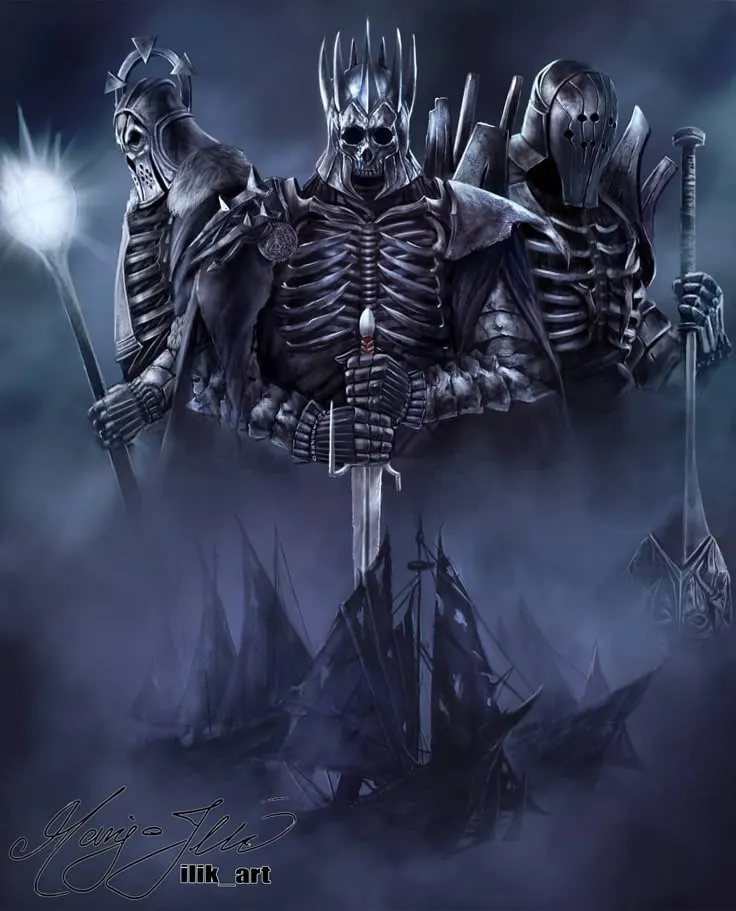 Photo: Wild Hunt, via i.pinimg.com
"The Wild Hunt is supposed to be this terrifying force of nature, but the final fight feels like a generic action game boss," says longtime series fan and YouTube creator "WitcherGeorge." "You go from being a monster hunter who wins through knowledge and preparation to being a guy who wins by hitting the dodge button at the right time."
The DLC expansions, Blood and Wine and Hearts of Stone, actually address this issue with boss encounters that reward the full spectrum of Witcher abilities. But by then, many players have already experienced the disappointment of seeing their carefully developed skills rendered obsolete.
Mass Effect's Shooter Identity Crisis
BioWare's Mass Effect trilogy presents an interesting case study in how this problem has evolved over time. The first game encouraged diverse approaches to combat, with biotic powers, tech abilities, and tactical squad management all feeling equally viable throughout most of the experience.
But the final encounter with Sovereign-controlled Saren heavily favors gunplay over the space magic that makes Mass Effect unique. By Mass Effect 3, this tendency reaches its peak with the Cerberus Base and Earth finale sequences that feel more like Gears of War than the tactical RPG combat the series had built its reputation on.
"Mass Effect taught players that they were space wizards with incredible powers, then the ending made them feel like generic soldiers," argues RPG design critic and former BioWare developer Jennifer Helper. "The disconnect isn't just mechanical — it's thematic. The game tells you that you're special, then asks you to win through the most mundane means possible."
The Japanese Exception
Interestingly, this problem seems largely confined to Western RPG development. Japanese RPGs like Persona 5, Final Fantasy XIV, and the Yakuza series consistently design final encounters that celebrate and amplify the mechanics they've been teaching throughout the game.
Persona 5's final boss requires mastery of the persona fusion system, social links, and turn-based strategy that the game has been developing for 100+ hours. Final Fantasy XIV's raid encounters are explicitly designed to test every aspect of your chosen job's toolkit. Even Yakuza's climactic fights feel like graduation ceremonies for the combat systems you've been learning.
"Japanese developers seem to view the final boss as a test of mastery," explains localization specialist and RPG historian Tim Rogers. "Western developers often seem to view it as a reset button that forces everyone to play the same way regardless of their journey to get there."
The Business Logic Behind Bad Bosses
So why do Western developers keep making this choice? The answer often comes down to marketing and focus testing. Final boss encounters need to work in trailers, be accessible to players who might not have fully engaged with all the game's systems, and create memorable moments that drive social media buzz.
A stealth archer slowly picking off enemies from extreme range doesn't make for compelling trailer footage. A mage carefully managing spell combinations and cooldowns doesn't create the kind of visceral action that tests well with focus groups. A tactical encounter that rewards 60 hours of system mastery might confuse players who rushed through the main story.
"Publishers want final bosses that anyone can understand immediately," explains former Bethesda designer Bruce Nesmith. "A sword fight reads clearly to everyone. A complex encounter that requires mastery of obscure game mechanics might leave some players feeling lost or frustrated."
This creates a fundamental tension between good game design and marketable game design.
The Player Perspective
Community reaction to this trend is increasingly negative, but it's complicated by the fact that many players adapt without fully realizing what they've lost. Reddit communities for major RPGs are filled with posts from players who describe respeccing their characters specifically for final encounters, treating it as a normal part of the experience rather than a design failure.
"I always keep a backup save before the final area so I can respec if needed," explains /r/skyrim moderator and longtime player David "Talos" Martinez. "It's just part of how these games work. You build for the journey, then you rebuild for the destination."
But other players find this expectation frustrating and immersion-breaking. "I spent 200 hours becoming the ultimate sneak thief, and the game basically tells me 'sorry, that doesn't count here,'" says Fallout community member Jessica Chen. "It feels like the game is ashamed of its own mechanics."
The Indie Alternative
Smaller developers and indie studios are increasingly designing around this problem, creating final encounters that celebrate player choice rather than constraining it. Games like Divinity: Original Sin 2, Disco Elysium, and even smaller titles like Hades design climactic moments that can be approached through multiple viable strategies.
"When you're not worried about trailer footage or focus group reactions, you can design encounters that actually test what you've been teaching," explains Larian Studios writer and designer Jan Van Dosselaer. "The final boss should be the moment where all your choices matter most, not where they matter least."
The Design Philosophy Question
This brings us to the core question: Is forcing players to abandon their developed playstyles a legitimate difficulty spike, or is it a fundamental failure of game design?
Proponents argue that final bosses should challenge players to demonstrate mastery across all game systems, not just their preferred approach. "If you can beat the entire game with one strategy, that's actually a balance problem," argues game design consultant and former id Software developer John Romero. "A good final boss should force adaptation and growth."
Critics counter that this approach betrays the implicit promise of RPG character building. "The whole point of an RPG is that your choices matter and define your experience," says RPG design veteran Chris Avellone. "If the final boss makes your choices irrelevant, then what was the point of the previous 60 hours?"
The Path Forward
Some modern developers are finding middle ground by designing final encounters with multiple phases or approaches that can accommodate different playstyles while still providing appropriate challenge. The Witcher 3's DLC bosses, Baldur's Gate 3's climactic encounters, and even some of Elden Ring's optional superbosses demonstrate that it's possible to create memorable, challenging final encounters without invalidating player choice.
The key seems to be designing encounters that test player mastery rather than forcing player conformity.
The Verdict
In 2026, the final boss paradox represents one of the last remaining artifacts of an older, more restrictive approach to game design — one that prioritized developer control over player agency, and marketing concerns over mechanical consistency.
The best RPGs of the current generation are the ones that trust their own systems enough to let players succeed or fail on their own terms, right up until the final credits roll.