The Difficulty Slider Lie: Why 'Normal Mode' in 2026 Is Nothing Like Normal Mode in 2016

The Difficulty Slider Lie: Why 'Normal Mode' in 2026 Is Nothing Like Normal Mode in 2016
Pop quiz: when was the last time you died in the first hour of a major AAA release? Not from falling off a cliff or walking into an obvious trap, but from legitimate combat challenge on the default difficulty setting?
If you're struggling to remember, you're not alone. Across the industry, "Normal" difficulty has undergone a quiet but dramatic recalibration over the past decade. What studios call "Normal" in 2026 would have been labeled "Easy" or even "Story Mode" just ten years ago. And this shift isn't accidental — it's the result of data-driven design decisions that prioritize completion rates over traditional challenge curves.
The problem? Nobody's talking about it.
The Analytics Revolution
The transformation started around 2018, when major publishers began implementing sophisticated telemetry systems that tracked not just what players did, but when and why they stopped playing. The data revealed an uncomfortable truth: the vast majority of players never finished games, and difficulty spikes were the primary culprit.
Sony's internal analytics, discussed in various developer interviews over the past few years, showed that 70% of players who died more than five times in the first two hours of a PlayStation exclusive never returned to complete it. Microsoft found similar patterns across their first-party titles. The financial implications were staggering — millions of dollars in development costs going unseen by the majority of paying customers.
The solution seemed obvious: make games easier. But rather than create a new difficulty tier, studios began systematically lowering what they labeled as "Normal."
The Stealth Nerf
God of War (2018) was one of the first major titles to implement this philosophy overtly. Creative Director Cory Barlog openly discussed how the team designed the default experience to ensure that "most players" could see Kratos and Atreus's complete journey. Compare this to the original God of War trilogy, where Normal mode regularly featured boss encounters that required multiple attempts to master.
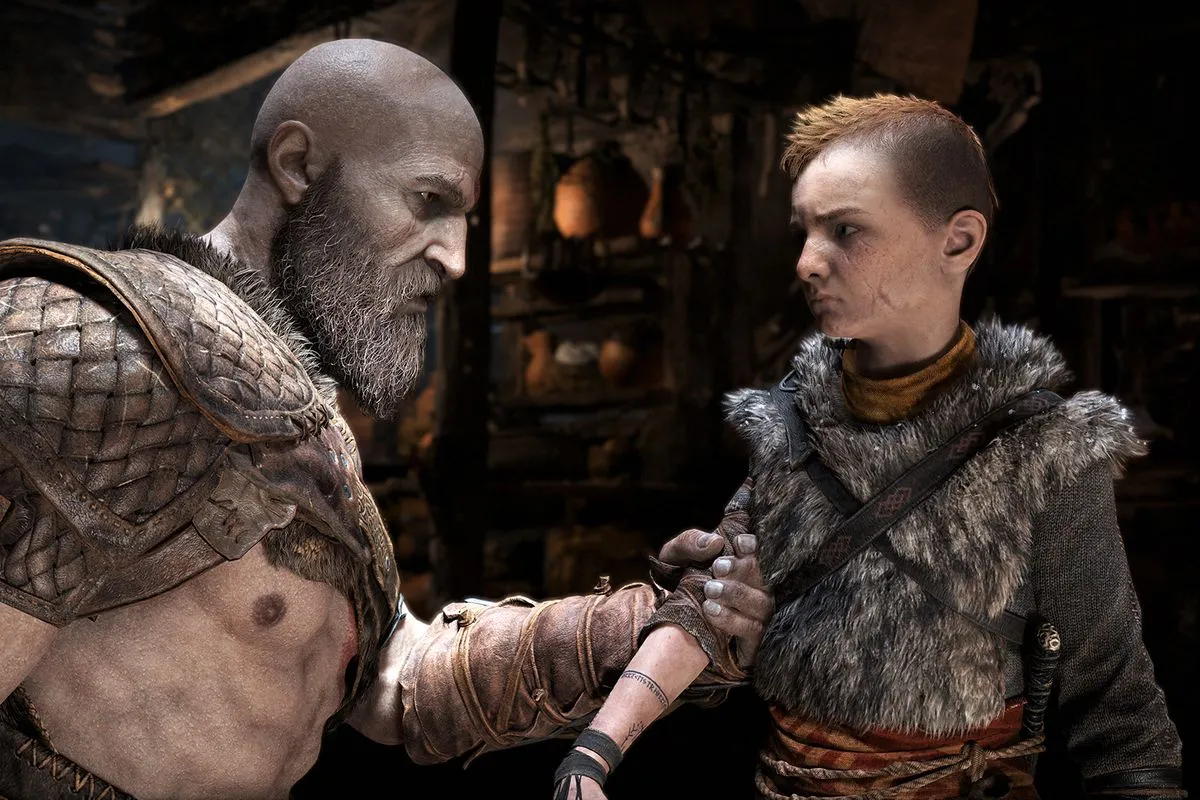 Photo: Cory Barlog, via www.playstationlifestyle.net
But God of War was transparent about its approach. Most studios have been far more subtle. Enemy damage output has decreased, player health regeneration has accelerated, and checkpoint frequency has increased — all while maintaining the "Normal" label that players associate with a balanced, challenging experience.
Assassin's Creed Valhalla exemplifies this trend. Despite being labeled as Normal difficulty, the default experience features:
- Enemy damage reduced by approximately 35% compared to previous entries
- Player health regeneration that activates during combat rather than requiring safe zones
- Simplified parry timing windows
- More frequent ability cooldown reductions
These aren't necessarily bad changes, but they represent a fundamental shift in what "Normal" means.
The Accessibility Mandate
The 2020s brought increased focus on gaming accessibility, and difficulty recalibration became part of that conversation. The argument: if games are meant to be enjoyed by everyone, then default difficulty should accommodate the broadest possible player base.
This philosophy influenced major releases like Horizon Forbidden West, which features Normal mode settings that would have been considered Easy in Horizon Zero Dawn. Machine health pools are smaller, weak point targeting is more forgiving, and the dodge roll provides more invincibility frames.
Again, these changes serve legitimate accessibility goals. But they've created a disconnect between player expectations and actual challenge levels that the industry hasn't fully acknowledged.
The Completion Rate Economics
Behind all these changes lies a simple economic reality: incomplete games don't generate DLC revenue, sequel interest, or positive word-of-mouth marketing. Publishers have discovered that a player who completes a game on "Easy" is more valuable than a player who abandons it on "Normal."
This has led to what developers privately call "completion rate optimization" — designing Normal mode to ensure that 80-85% of players reach the ending, compared to historical completion rates of 40-60%.
Spider-Man 2 (2023) represents the current state of this philosophy. The default difficulty features:
- Combat encounters that rarely last more than 30 seconds
- Simplified stealth sections with generous detection radii
- Boss fights with clearly telegraphed attack patterns and forgiving timing windows
The result is a game that feels consistently engaging without ever feeling genuinely challenging.
What We've Lost
The recalibration of Normal mode has created an entire generation of players who've never experienced the satisfaction of overcoming legitimate adversity in a mainstream game. They've been trained to expect constant forward progress rather than the peaks and valleys that create memorable gaming moments.
More concerning is how this affects player identity. For decades, completing a game on Normal difficulty was a meaningful achievement that suggested basic competency with the medium. Now, Normal completion is essentially guaranteed for anyone who invests the time.
This has pushed players seeking traditional challenge levels toward Hard or even Extreme difficulties that often feel artificially punishing rather than thoughtfully balanced. The middle ground — challenging but fair — has largely disappeared from mainstream gaming.
The Hardcore Displacement
As Normal mode has become easier, traditional "hardcore" players have been pushed toward difficulty settings that weren't designed for balanced experiences. Hard mode in most modern games doesn't just increase challenge — it often introduces mechanics (like limited saves or permanent death) that fundamentally change the game's structure.
This has created a bifurcated player base: casual players who experience games as intended on Normal, and experienced players who must choose between "too easy" and "artificially punishing" with little middle ground.
The Indie Alternative
Interestingly, the indie gaming scene has largely resisted this trend. Games like Hollow Knight, Celeste, and Hades maintain traditional difficulty philosophies where Normal mode provides genuine challenge alongside fair progression systems.
These titles often achieve the completion rates that AAA studios seek through superior design rather than reduced difficulty. They prove that players will overcome significant challenges when the systems feel fair and the progression feels meaningful.
Looking Forward
The industry seems to be recognizing this issue. Recent titles like Elden Ring and Baldur's Gate 3 have found massive success while maintaining traditional difficulty philosophies. Players are hungry for games that respect their ability to overcome challenges.
The solution isn't necessarily to make games harder, but to be more honest about what difficulty labels represent. If today's Normal is yesterday's Easy, studios should embrace that reality rather than maintaining the fiction that nothing has changed.
Ultimately, the difficulty slider lie represents a broader tension in modern game development between accessibility and authenticity. The best path forward likely involves more granular difficulty options that let players customize their experience without sacrificing the meaningful challenge that makes gaming memorable.
The question is whether the industry has the courage to admit that Normal isn't normal anymore — and decide whether that's a problem worth solving.