The Borrowed Build: Why Cross-Game Loadout Thinking Is the Skill No Tutorial Ever Teaches

Every veteran gamer has done it. You boot up a new RPG and immediately start hoarding consumables because Resident Evil taught you that ammo scarcity is always around the corner. You build a glass cannon mage in an action game because your Diablo muscle memory screams "high risk, high reward." You approach every survival game like it's Rust, treating every other player as a potential threat even when the game actively encourages cooperation.
This is cross-game loadout thinking — the unconscious transfer of build philosophies, resource management habits, and strategic approaches from one game to another. It's arguably the most important skill no tutorial ever teaches, and in 2026's increasingly diverse gaming landscape, it's becoming both a superpower and a potential trap.
The Philosophy Transfer Problem
Take stamina management. Players who cut their teeth on Dark Souls approach every action game with a deeply ingrained respect for the stamina bar. They'll spec into endurance early, avoid heavy armor that tanks their roll distance, and treat every encounter like a careful dance of attack windows and recovery frames.
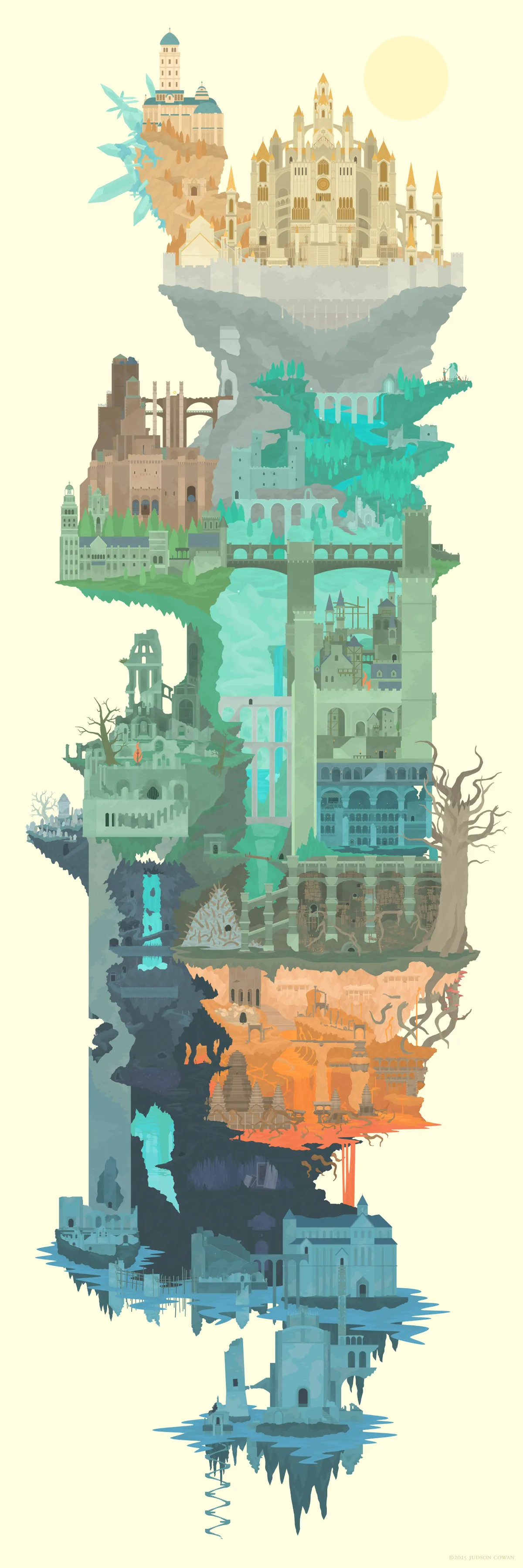 Photo: Dark Souls, via cdn.vox-cdn.com
But drop that same player into Monster Hunter World, where stamina management follows completely different rules, and watch them struggle. They'll under-utilize the more forgiving stamina system, missing out on aggressive combos because their Souls-trained brain is constantly looking for safe retreat windows that don't exist in the same way.
"I see this constantly in our community," says Reddit user and Monster Hunter veteran /u/GreatSwordMain. "New players who come from Souls games spend the first 20 hours playing way too defensively. They're waiting for punish windows in a game that wants you to be way more aggressive."
The reverse is equally true. Players trained on Monster Hunter's more forgiving stamina system often struggle when they transition to Souls-likes, burning through their stamina bar and getting caught in vulnerable states because they haven't internalized the harsher resource management.
The Extraction Shooter Mindset
Perhaps nowhere is this more obvious than in how extraction shooter veterans approach other survival games. Players who've spent hundreds of hours in Tarkov or Hunt: Showdown develop a specific mindset: every piece of gear has real value, every engagement carries meaningful risk, and inventory space is sacred.
Transfer that mindset to a traditional survival game like Valheim or Green Hell, and you get players who are simultaneously over-prepared and under-equipped. They'll spend hours organizing their inventory with military precision while missing the game's actual progression systems.
"Tarkov players are the worst at Rust," jokes streamer and survival game veteran CoconutB. "They treat every piece of scrap metal like it's a labs keycard. Meanwhile, Rust wants you to lose everything and rebuild constantly. The mindset is completely wrong."
But that same extraction shooter mindset becomes a massive advantage in games that actually reward careful resource management. Tarkov veterans excel in survival horror games, roguelikes, and any title where inventory management and risk assessment are core skills.
The MOBA Skill Transfer
MOBA players might have the most transferable cross-game skills of any gaming community. The constant awareness of cooldowns, resource management, positioning, and team composition creates a mental framework that applies surprisingly well to other competitive genres.
Watch a Diamond League player pick up a new hero shooter, and you'll see them immediately start thinking in terms of cooldown rotations, ultimate economy, and team synergy. They'll often outperform mechanically superior players simply because they understand the underlying strategic layer.
But that same analytical mindset can become a liability in more casual or creative games. MOBA veterans often struggle with single-player RPGs because they're constantly looking for optimal builds and meta strategies in games designed around personal expression and experimentation.
The Fighting Game Exception
Fighting game players represent an interesting exception to most cross-game transfer patterns. The skills that make someone good at Street Fighter — frame data knowledge, input precision, adaptation under pressure — are so specific that they rarely transfer directly to other genres.
But when they do transfer, the results are dramatic. Fighting game veterans often excel at action games with precise timing windows, like Devil May Cry or Bayonetta. They approach these games with a level of mechanical precision that casual players simply can't match.
"Fighting game players see patterns everywhere," explains tournament player and coach Brian "BrianF" Foster. "We're trained to recognize frame traps, mixups, and conditioning. When you put that mindset into an action RPG, you start seeing boss patterns that other players miss completely."
When Cross-Game Thinking Goes Wrong
Not all skill transfer is beneficial. RPG veterans often struggle with action games because they're constantly looking for numbers to optimize rather than focusing on mechanical skill development. Shooter players frequently approach strategy games like they're deathmatch arenas, prioritizing immediate tactical gains over long-term strategic positioning.
Perhaps most dramatically, MMO raiders often struggle with single-player games because they're constantly looking for the "correct" way to play rather than experimenting and discovering their own approach.
"I've seen WoW mythic raiders get completely stuck in Elden Ring," says content creator and Souls veteran LobosJr. "They're so used to having a defined role and optimal rotation that they can't adapt to a game that wants you to experiment and find your own solutions."
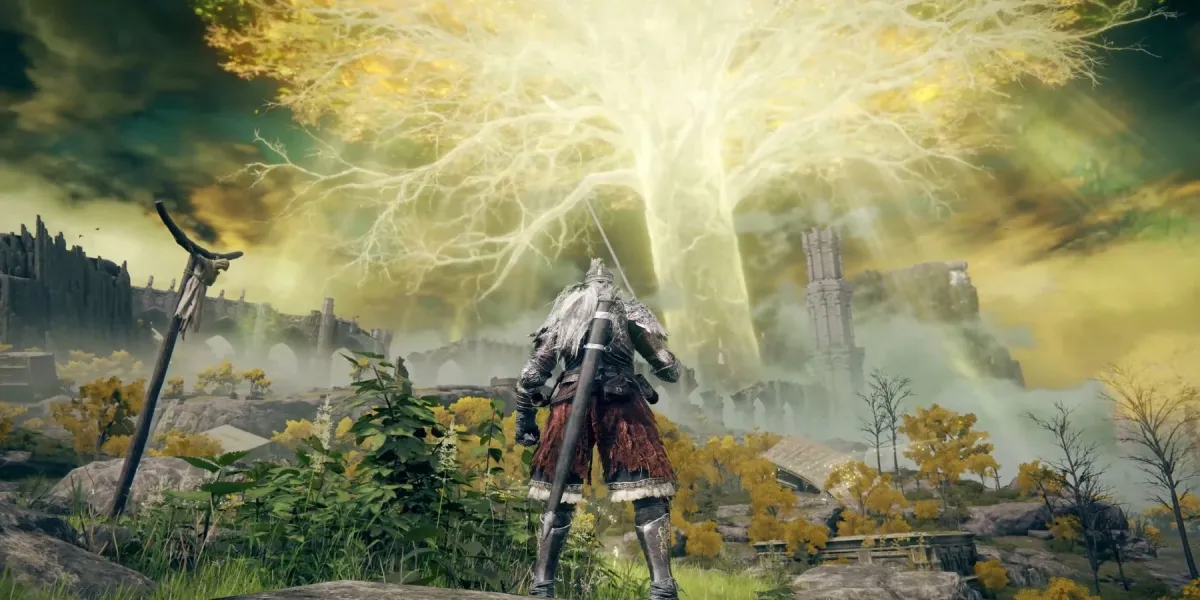 Photo: Elden Ring, via static0.gamerantimages.com
The Meta-Gaming Meta
In 2026, the most successful players aren't necessarily the ones with the best mechanical skills — they're the ones who can consciously recognize when their cross-game instincts are helping or hurting them. This meta-awareness, the ability to step back and evaluate your own gaming habits, is becoming increasingly valuable as games become more diverse and genre boundaries continue to blur.
The best modern gamers are loadout philosophers, constantly asking themselves: "Am I approaching this game with the right mindset? Are my instincts from other games helping me here, or are they holding me back?"
The Adaptation Advantage
Ultimately, cross-game loadout thinking isn't about having the "right" approach to every game — it's about having a diverse toolkit of approaches and knowing when to use each one. The players who thrive in 2026's gaming landscape are the ones who can consciously switch between different gaming mindsets depending on what each title demands.
They can think like a Souls player when precision and patience are rewarded, like a MOBA player when strategy and team coordination matter, and like a sandbox player when creativity and experimentation are the point.
In an industry where every new release seems to blend genres in unexpected ways, the ability to consciously adapt your mental loadout might be the most valuable skill of all.