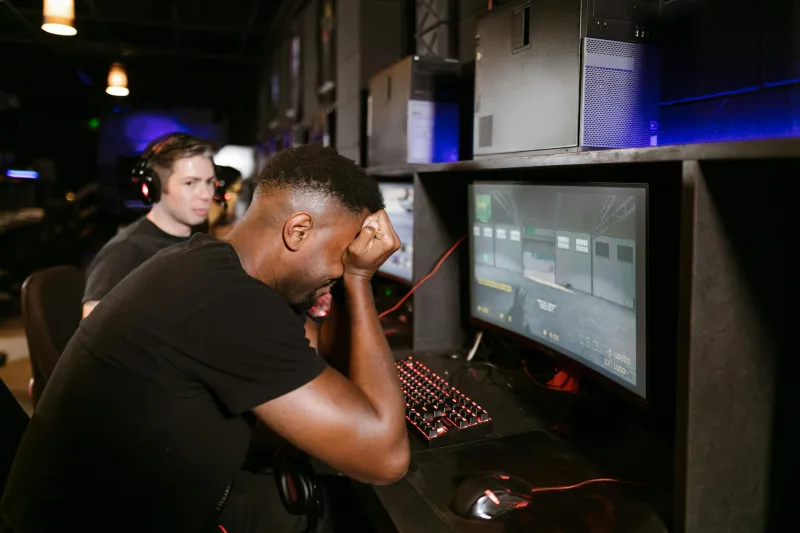
Remember when dying in a video game meant nothing more than watching a brief animation, maybe losing a few minutes of progress, and hitting respawn? Those days are long gone. In 2026, death has become one of gaming's most sophisticated economic instruments — a carefully engineered system that influences everything from your wallet to your sleep schedule.
What started as simple punishment mechanics in arcade games has evolved into what industry analysts now call the "respawn economy" — a complex web of penalties, timers, currencies, and psychological triggers designed to maximize player engagement and, increasingly, revenue.
From Game Over to Pay Over
The transformation didn't happen overnight. Classic games punished death with lost progress or finite lives because arcade operators needed players to keep feeding quarters into machines. Home consoles shifted this dynamic, making death a learning tool rather than a revenue stream. But as games moved online and adopted live-service models, death became an opportunity.
"We're seeing death mechanics that would have been considered predatory ten years ago become standard practice," says Dr. Sarah Chen, a behavioral economist who studies gaming monetization. "The line between challenge and exploitation has become increasingly blurred."
Today's respawn systems operate on multiple economic layers. There's the immediate cost — lost time, degraded equipment, or consumed resources. Then there's the meta-economy: premium currencies that can bypass death penalties, subscription services that reduce respawn timers, and battle pass XP that gets slashed when you die too often.
The Durability Trap
Perhaps nowhere is this more evident than in durability systems. Games like Elden Ring and The Legend of Zelda popularized the idea that your weapons should break, but mobile and free-to-play titles have weaponized this concept. In many modern RPGs, dying doesn't just cost you progress — it damages your gear, forcing you to either grind for repair materials or purchase them with premium currency.
"It's brilliant from a business perspective," admits former mobile game designer Marcus Rodriguez, who left the industry in 2024. "Every death creates a micro-friction that can be resolved with a micro-transaction. Players don't even realize they're being monetized."
The psychological impact is subtle but powerful. Players begin to fear death not because it interrupts their gameplay, but because it literally costs them money. This fear drives more cautious, conservative play styles and, paradoxically, longer gaming sessions as players grind to rebuild what they've lost.
The Session Extension Playbook
Modern respawn economies aren't just about immediate monetization — they're about session extension. Energy systems that deplete when you die, cooldown timers that prevent immediate respawning, and "insurance" mechanics that let you recover lost items all serve the same purpose: keeping you in the game longer.
Data from gaming analytics firm PlayerPulse shows that games with complex death penalties see 23% longer average session times compared to traditional respawn systems. "Players feel compelled to 'make up' for their deaths before logging off," explains PlayerPulse CEO Jennifer Walsh. "It's the gaming equivalent of chasing losses at a casino."
Some games have taken this to extreme lengths. Korean MMO Lost Ark famously features death penalties that can take hours to fully recover from without premium assistance. Mobile titles regularly implement "death streaks" that compound penalties, making each subsequent death more expensive than the last.
The Premium Resurrection Revolution
The most controversial evolution in respawn economics is the rise of premium resurrection options. These range from subtle conveniences — like skipping respawn timers for a small fee — to blatant pay-to-win mechanics that let players instantly recover all lost progress and items.
Diablo Immortal faced massive backlash for its resurrection system, but the model has quietly spread across the industry. Even traditionally single-player franchises now feature online components with monetized death mechanics. The upcoming Assassin's Creed Nexus reportedly includes optional "Animus Insurance" that preserves your progress through premium subscriptions.
"We're seeing the gamification of death itself," warns consumer advocate Tom Bradley from the Interactive Entertainment Consumer Protection Alliance. "These aren't gameplay mechanics anymore — they're psychological manipulation tools designed to extract money from players at their most vulnerable moments."
The Indie Resistance
Not every developer has embraced the respawn economy. Indie studios and some AAA holdouts continue to design death as a pure gameplay mechanic. Games like Hades, Celeste, and Hollow Knight use death as a learning tool, with minimal or no economic penalties.
"Death should teach you something about the game, not about your credit card limit," says Celeste designer Maddy Thorson. "When dying becomes expensive, it stops being educational and starts being exploitative."
These games often see higher player satisfaction scores and better long-term retention, suggesting that respawn economies might be short-sighted despite their immediate revenue benefits.
The Regulatory Reckoning
As respawn economies become more sophisticated, regulators are taking notice. The European Union's proposed Digital Services Act includes provisions that could classify certain death penalties as gambling mechanics. Several U.S. states are considering legislation that would require games to disclose the true cost of death mechanics.
"When a player can spend $50 recovering from a single death, we're no longer talking about game design," says California State Senator Maria Gonzalez, who authored the Gaming Transparency Act. "We're talking about predatory business practices that target addiction-prone behavior."
The Future of Dying
As we move deeper into 2026, the respawn economy shows no signs of slowing down. Upcoming titles are experimenting with AI-driven death penalties that adjust based on player spending behavior, social media integration that lets friends "bail you out" of death penalties, and even cryptocurrency-based resurrection markets.
The question isn't whether these systems will continue to evolve — it's whether they'll evolve in ways that respect players or exploit them. The early signs suggest the latter, with industry revenue from "death monetization" projected to reach $2.3 billion by 2027.
The Verdict
The modern respawn economy represents gaming's most insidious evolution: the transformation of failure from a learning opportunity into a revenue stream. While some implementations add genuine strategic depth, the majority exist solely to extract money from players at their most frustrated moments. As the industry continues to prioritize engagement metrics over player satisfaction, dying in games has become less about overcoming challenges and more about opening wallets — a trend that ultimately diminishes the medium's artistic and educational potential while exploiting the very emotions that make gaming compelling.