
The Loadout Lie: Why the 'Recommended Build' in Your Favorite RPG Is Almost Never Actually the Best One
Every RPG has that moment. You're staring at a skill tree, overwhelmed by branching paths and cryptic descriptions, when salvation appears: a little green checkmark next to "Recommended" or a helpful tooltip suggesting you "try this popular build." It feels like a lifeline in an ocean of complexity. There's just one problem — following that advice is often the fastest way to lock yourself into mediocrity.
The uncomfortable truth is that recommended builds in most RPGs aren't designed to make you powerful. They're designed to keep you playing. There's a massive difference, and understanding it is the key to unlocking the real potential hiding beneath your favorite game's surface.
The Tutorial Tax: Why Games Lie to Keep You Comfortable
Let's start with the obvious culprit: Elden Ring. FromSoftware's masterpiece offers class recommendations that feel almost deliberately misleading. Pick the Samurai for its "balanced stats and katana," the game suggests, positioning it as an ideal starting point for new players. What it doesn't tell you is that the Samurai's stat distribution is actually one of the least efficient in the entire game for most viable builds.
 Photo: Elden Ring, via images-wixmp-ed30a86b8c4ca887773594c2.wixmp.com
Meanwhile, the Wretch — literally described as having "nothing" — is mathematically superior for almost every optimized character build because its even stat distribution wastes fewer points on attributes you'll never use. But recommending the naked guy with a club to newcomers would send half the player base running back to their comfort zone.
This isn't an accident. It's the tutorial tax in action. Game developers have learned that overwhelming new players with optimal-but-complex strategies leads to higher drop-off rates than gently guiding them toward functional-but-suboptimal builds. The recommended loadout becomes a training wheel that most players never remove.
The Comfort Zone Conspiracy
Destiny 2 takes this philosophy to its logical extreme. The game's "Popular" loadout suggestions in the character menu consistently favor weapons and armor with high stability, generous aim assist, and forgiving damage falloff curves. These recommendations make perfect sense for someone learning the ropes — they minimize punishment for imperfect play and create positive feedback loops that keep players engaged.
But step into any high-level PvP match or endgame raid, and you'll notice something interesting: almost nobody is using those popular builds. Instead, you'll see players wielding weapons with punishing recoil patterns and unforgiving optimal ranges, paired with armor mods that sacrifice survivability for damage output or ability regeneration.
The gap isn't just about skill — it's about fundamentally different design philosophies. Popular builds are optimized for the average engagement. Meta builds are optimized for perfect execution under ideal conditions. The game's recommendation system can't tell the difference between a player who needs help hitting their shots and a player who hits every shot but wants to hit harder.
When the Math Doesn't Match the Marketing
Diablo IV's skill system provides perhaps the clearest example of this disconnect. The game's recommended builds for each class consistently favor skills with broad area-of-effect damage and defensive bonuses — setups that feel immediately powerful and keep players alive while they learn enemy patterns and dungeon layouts.
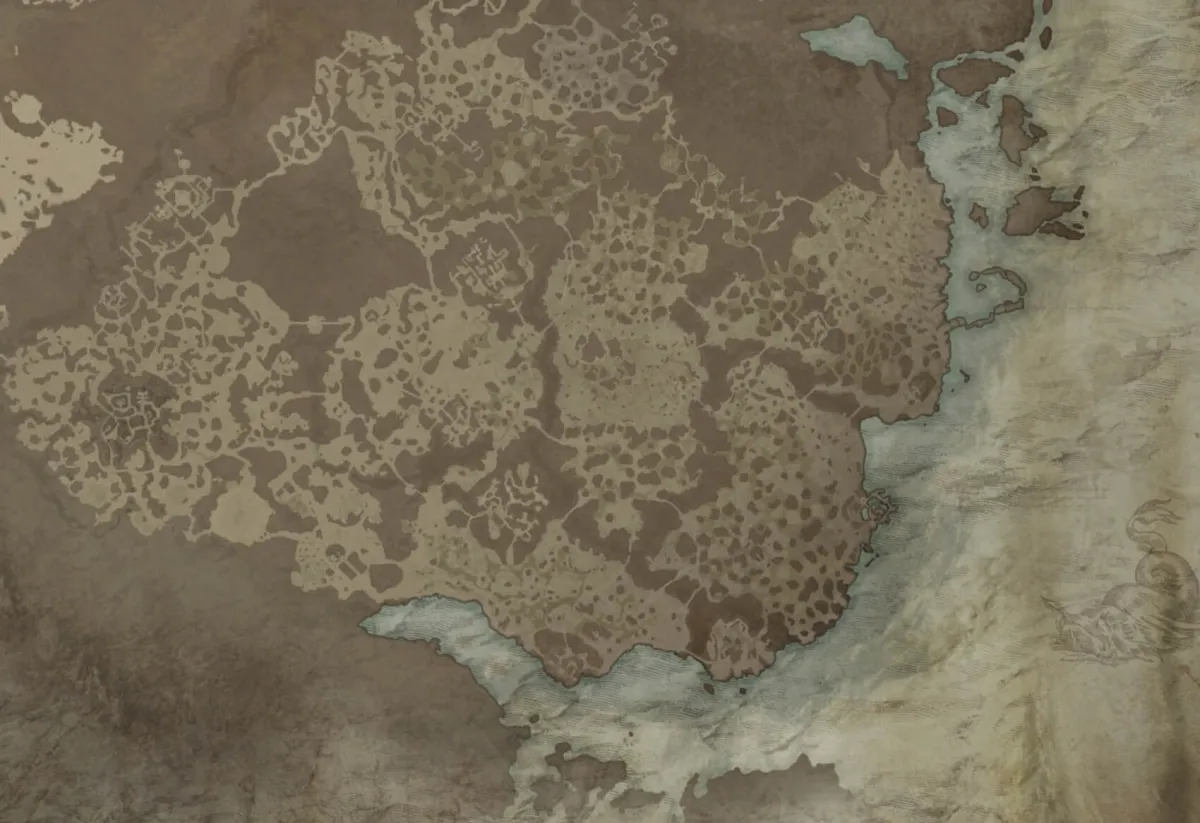 Photo: Diablo IV, via cdn.mapgenie.io
But dig into the game's damage calculations, and you'll discover that the most effective builds often revolve around obscure synergies between seemingly unrelated skills. The Necromancer's Corpse Explosion build, for example, scales exponentially with enemy density in ways that make it devastatingly effective in endgame content, despite feeling weak and clunky during the leveling process where most players form their opinions.
The recommended Necromancer build, by contrast, focuses on straightforward minion management and consistent damage output — perfectly functional for the campaign, but incapable of competing with specialized builds in the content that matters most to dedicated players.
The Interface Influence
Part of the problem lies in how games present information. When you hover over a weapon in most RPGs, you see damage per second, critical hit chance, and maybe some secondary stats. What you don't see is how that weapon's damage curve interacts with specific enemy types, how its attack speed affects animation canceling opportunities, or how its hidden stats influence things like stagger thresholds.
This creates a fundamental information asymmetry. Casual players make decisions based on the simplified data the interface provides, while experienced players make decisions based on complex interactions they've discovered through extensive testing or community research. The game's recommendation system can only work with the simplified data, so it consistently points players toward builds that look good on paper but perform poorly in practice.
The Community Correction
Interestingly, the most successful RPGs have learned to embrace this disconnect rather than fight it. Games like Path of Exile have essentially given up on meaningful in-game build recommendations, instead fostering robust community tools and databases where players can share and refine optimal builds.
This approach acknowledges a fundamental truth: the best builds in complex RPGs are almost always discovered through community collaboration and extensive testing, not through algorithmic analysis of surface-level stats. The game's job isn't to solve optimization for players — it's to provide enough depth that optimization remains an ongoing challenge.
Breaking Free from the Recommendation Trap
So how do you escape the recommended build trap? Start by questioning every suggestion the game makes. When a tooltip recommends a skill or piece of equipment, ask yourself: recommended for what? Survivability? Ease of use? Raw damage output? Understanding the underlying philosophy behind a recommendation is often more valuable than the recommendation itself.
Second, seek out builds that feel awkward or counterintuitive at first. The most powerful setups in RPGs often require players to unlearn habits that served them well in earlier content. If a build feels immediately comfortable, there's a good chance it's optimized for comfort rather than performance.
Finally, remember that recommended builds serve a purpose — just not the purpose most players think. They're training wheels, not racing tires. Once you've learned to ride, it's time to take them off and discover what your character can really do.
The next time your favorite RPG suggests a build, smile politely and then go find out what the speedrunners are actually using.