The Platinum Trap: How Trophy Culture Turned Completionism Into a Compulsion

Somewhere around hour 47 of a 60-hour RPG, something shifts. The story is wrapped up. The credits have rolled. You've seen what the game has to offer, and honestly? You're kind of done with it. But the trophy list says 73% complete, and there are three missable collectibles in a zone you'll never naturally revisit, and the platinum is right there, and so you open the map, pull up the guide you swore you wouldn't need, and spend another eight hours doing things you actively don't enjoy in a game you've technically already finished.
This is the platinum trap. And if you've ever fallen into it, you already know exactly what it feels like.
Achievement Culture and the Architecture of Compulsion
Trophy and achievement systems have been part of console gaming since the Xbox 360 era, but what started as a lightweight reward layer has evolved into something considerably more psychologically complex. For a significant portion of the American gaming audience — particularly PlayStation owners chasing that platinum pop — the trophy list has become a secondary game running parallel to the actual one. Sometimes it enhances the experience. Often, it quietly hijacks it.
The mechanics at play here aren't accidental. Achievement design is, at this point, a studied discipline, and studios that want to maximize engagement metrics have a clear incentive to structure trophy lists in ways that extend playtime well beyond what the core experience demands. Stack enough missables, collectibles, difficulty-specific runs, and multiplayer-dependent trophies onto a list, and you've built a machine that keeps players in your game long after their natural enthusiasm has expired.
The psychological engine driving this is sunk-cost thinking, dressed up in dopamine clothing. The further into a completion run you get, the harder it becomes to walk away — not because the game is getting better, but because abandoning the effort feels like waste. You've already put in 40 hours. The platinum is 20 hours away. Quitting now means those 40 hours "don't count." It's irrational, and most players know it's irrational, and they keep going anyway.
When the List Becomes the Game
Talk to any self-identified trophy hunter and you'll hear some version of the same story: there are games they've platinum'd that they genuinely loved, and there are games they've platinum'd that they kind of hated by the end. The distinction matters, because the latter category reveals something uncomfortable about what completion culture has become.
When the goal shifts from "experience this game" to "finish this list," the game itself becomes almost incidental — a series of checklist items to be processed rather than a creative work to be engaged with. Players in deep completionist runs frequently describe the experience in terms that sound less like leisure and more like work. "I just need to knock out the collectibles." "I'm grinding the last two trophies." "I'll be done with this game in another 12 hours."
That language — done with this game — is telling. It frames the game as a task to be completed rather than an experience to be had. And once you're in that headspace, the question of whether you're actually enjoying yourself becomes almost irrelevant. You're not playing to have fun. You're playing to finish.
The Developer's Role in All of This
It's worth being direct here: some studios design trophy lists with genuine craft and player respect in mind. The best achievement lists function as curated challenges that push players to engage with parts of the game they might otherwise miss, rewarding mastery and exploration in ways that feel organic. Games like Hades and Hollow Knight have earned praise specifically because their achievement structures feel like natural extensions of the experience rather than arbitrary friction generators.
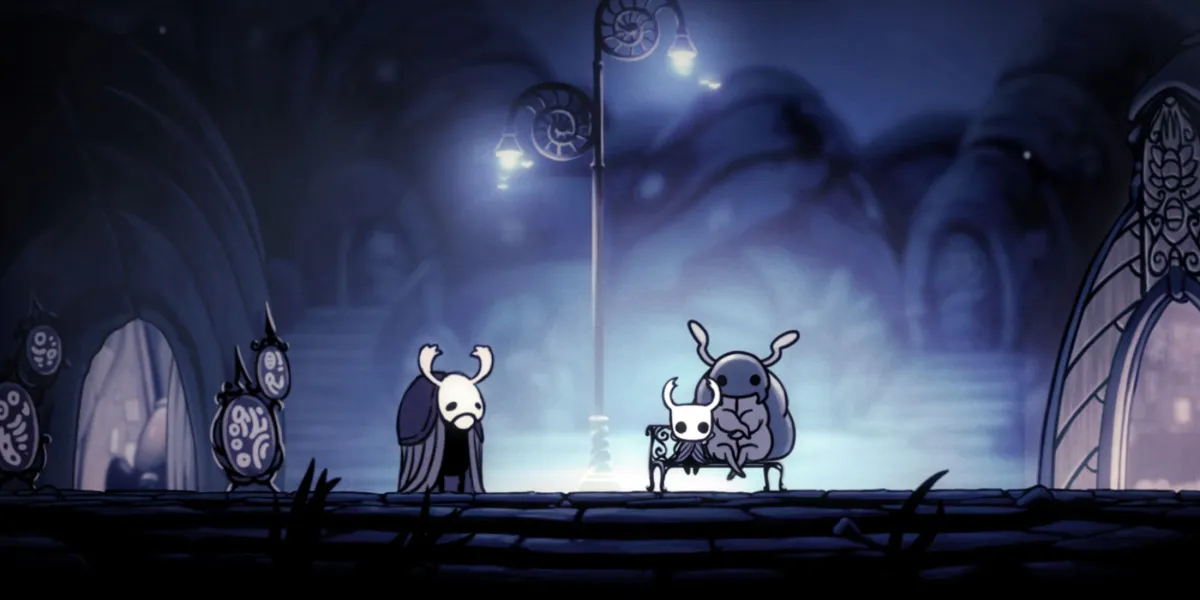 Photo: Hollow Knight, via static0.gamerantimages.com
But then there's the other kind. The kind with 300 collectibles spread across a map with no in-game tracker. The kind that requires you to play through the entire game twice on different difficulty settings, not because the experience changes meaningfully, but because it pads the list. The kind with trophies tied to online modes that are already half-dead at launch, making them functionally unobtainable within a year of release.
These aren't oversights. They're choices. And they reflect a design philosophy that prioritizes engagement metrics over player experience — a philosophy that treats the time players spend in your game as a KPI to be maximized rather than a resource to be respected.
The Dopamine Math Doesn't Always Add Up
Here's what makes the platinum pop so powerful and so potentially misleading as a reward signal: it feels like satisfaction, but it isn't always satisfaction. There's a real neurological hit when that trophy notification fires. Your brain registers completion, releases the appropriate chemicals, and logs it as a win. But the subjective experience of getting there — the hours of joyless collectible hunting, the repeated failed attempts at a difficulty spike that exists solely to justify a trophy — doesn't always match the reward.
This is the hollow completion problem. The metric says you finished the game. The trophy list says you mastered it. But your actual experience of those final hours tells a different story, one that the platinum notification doesn't capture and the completion percentage doesn't reflect.
For a subset of players, this gap is genuinely distressing. Gaming forums and Reddit communities are full of posts from people who describe feeling burned out, resentful, or weirdly empty after earning platinums they spent weeks grinding toward. They expected satisfaction and got relief — relief that it's over, relief that they can stop. That's not what a reward system is supposed to produce.
Is There a Better Way?
Some developers are experimenting with alternatives. Shorter, more focused achievement lists. Trophies tied to story moments rather than collectible counts. Systems that reward how you play rather than just how much you play. There's a growing design conversation around achievement lists that respect player time while still providing meaningful goals.
But the structural incentives pushing in the other direction — engagement metrics, playtime data, the competitive pressure of PlayStation's trophy grade system — aren't going away. As long as playtime is a metric that matters to publishers, and as long as players keep chasing platinums on games they've stopped enjoying, the trap will keep getting built.
The real question isn't whether trophy systems are good or bad. They can be both. The question is whether you're playing the game — or whether the game is playing you.