The Map Is Lying to You: How Open-World Waypoints Became the Biggest Enemy of Genuine Exploration

Open your favorite open-world game right now. Look at that minimap in the corner of your screen. Count the icons, the objective markers, the glowing trails leading you exactly where the developers think you should go next. Now ask yourself an honest question: when was the last time you turned off that minimap and just... wandered?
If you can't remember, you're experiencing firsthand the most insidious design trend in modern gaming. The industry has become so obsessed with guiding players through carefully curated experiences that they've forgotten the fundamental appeal of open worlds: the joy of getting lost and finding your own way.
We've turned exploration into GPS navigation, and it's killing the very thing that made open-world games magical in the first place.
The Ubisoft Formula Spreads Like Wildfire
The problem started with Ubisoft's tower-climbing, icon-collecting approach that dominated the 2010s, but it's metastasized far beyond anything those early Assassin's Creed games ever attempted. Modern open-world titles don't just show you where to go — they show you where you've been, where you haven't been, what you've collected, what you haven't collected, and exactly how many steps it will take to reach your next objective.
Horizon Forbidden West features over 400 collectible icons on its map. The Witcher 3, despite being praised for its world design, clutters its interface with so many question marks that players developed mods specifically to remove them. Even Breath of the Wild, often cited as a return to pure exploration, still features a shrine sensor that beeps when you're near undiscovered content.
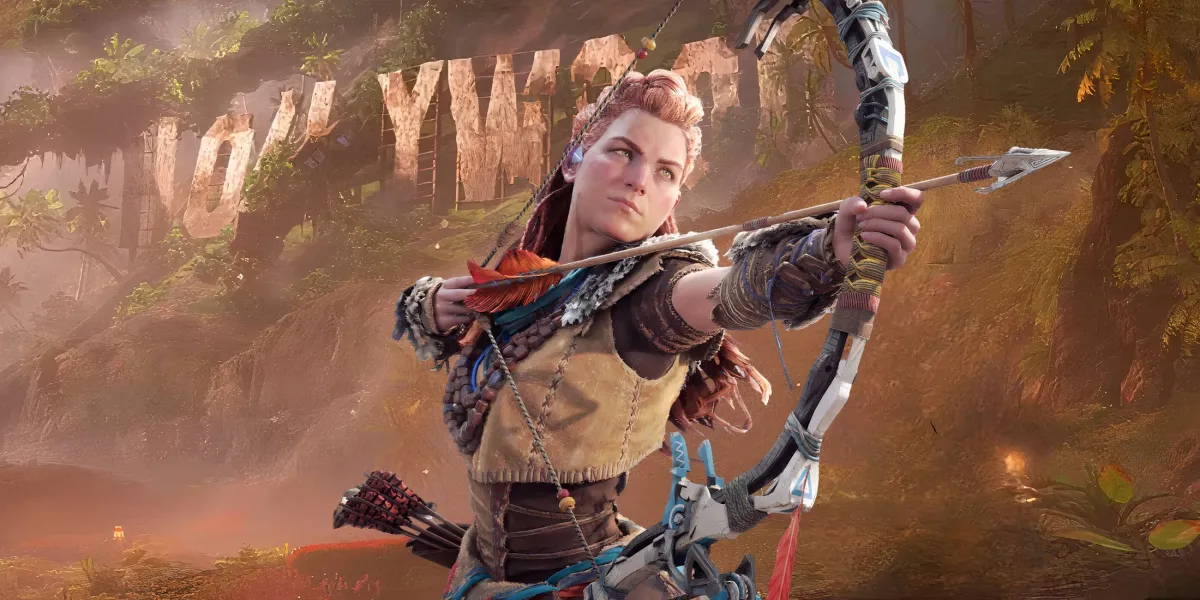 Photo: Horizon Forbidden West, via static0.gamerantimages.com
The result? Players have been trained to follow dots on a screen rather than engage with the actual world around them.
The Psychology of Waypoint Dependency
Here's what happens when you give players a glowing trail to follow: they stop looking at everything else. Eye-tracking studies conducted by various UX research firms show that players spend 60-70% of their visual attention on minimap elements when waypoint systems are active. They're not seeing the carefully crafted environmental storytelling, the subtle visual cues that indicate hidden secrets, or the organic paths that lead to unscripted discoveries.
This creates what psychologists call "learned helplessness" — players become so dependent on external guidance that they lose confidence in their ability to navigate independently. Remove the waypoints, and many players report feeling anxious or lost, even in environments they've traversed dozens of times.
Red Dead Redemption 2 attempted to address this by offering a "minimal HUD" option, but tellingly, fewer than 15% of players ever enabled it according to Rockstar's telemetry data. The majority preferred the comfort of constant guidance over the uncertainty of genuine exploration.
The Death of Environmental Storytelling
When players are constantly staring at minimaps, they miss the subtle details that make game worlds feel alive. The way a path naturally curves around a hillside. The visual landmarks that ancient civilizations would have used for navigation. The environmental clues that suggest hidden areas or alternative routes.
Elden Ring proved that players still hunger for this kind of organic discovery when given the chance. FromSoftware deliberately avoided traditional waypoint systems, instead using visual landmarks, environmental storytelling, and subtle lighting cues to guide exploration. The result was a game where players shared stories about finding hidden areas and secret bosses through careful observation rather than following objective markers.
But Elden Ring is the exception, not the rule. Most open-world games treat their environments as elaborate menu systems — collections of interactive objects to be systematically cleared rather than spaces to be experienced and understood.
The Checklist Mentality
Modern open-world design has transformed exploration from an intrinsic motivation (curiosity, wonder, discovery) into an extrinsic one (completion percentages, achievement unlocks, map clearing). Players approach these worlds like productivity apps, optimizing routes between objectives rather than allowing serendipitous encounters to unfold naturally.
Assassin's Creed Valhalla exemplifies this problem. Despite featuring a lovingly recreated Dark Ages England, most players experience it as a series of waypoint-to-waypoint sprints. They miss the subtle environmental storytelling that explains how these communities developed, the natural landmarks that would have guided actual medieval travelers, and the organic rhythms of exploration that the setting demands.
The game's own metrics bear this out: the average player spends less than 30 seconds in any given location that isn't marked as an objective. They're not exploring England — they're completing a to-do list that happens to be set in England.
The Fear of Player Confusion
Why do developers create these over-guided experiences? The answer lies in playtesting data and focus group feedback. When players get lost or confused during testing sessions, they report negative experiences. Publishers interpret this as evidence that clearer guidance is needed, leading to increasingly intrusive waypoint systems.
But this creates a false feedback loop. Players who are accustomed to constant guidance will naturally feel lost when it's removed, but that doesn't mean the guidance was necessary in the first place. It just means they never developed the skills needed for independent navigation.
The Legend of Zelda: Breath of the Wild faced this exact challenge during development. Nintendo's playtesting revealed that many players felt overwhelmed by the game's open structure, but the team resisted the urge to add traditional waypoint systems. Instead, they refined the visual design language of the world itself, making landmarks more distinctive and sightlines clearer. The result was a game that taught players to navigate through environmental awareness rather than UI dependency.
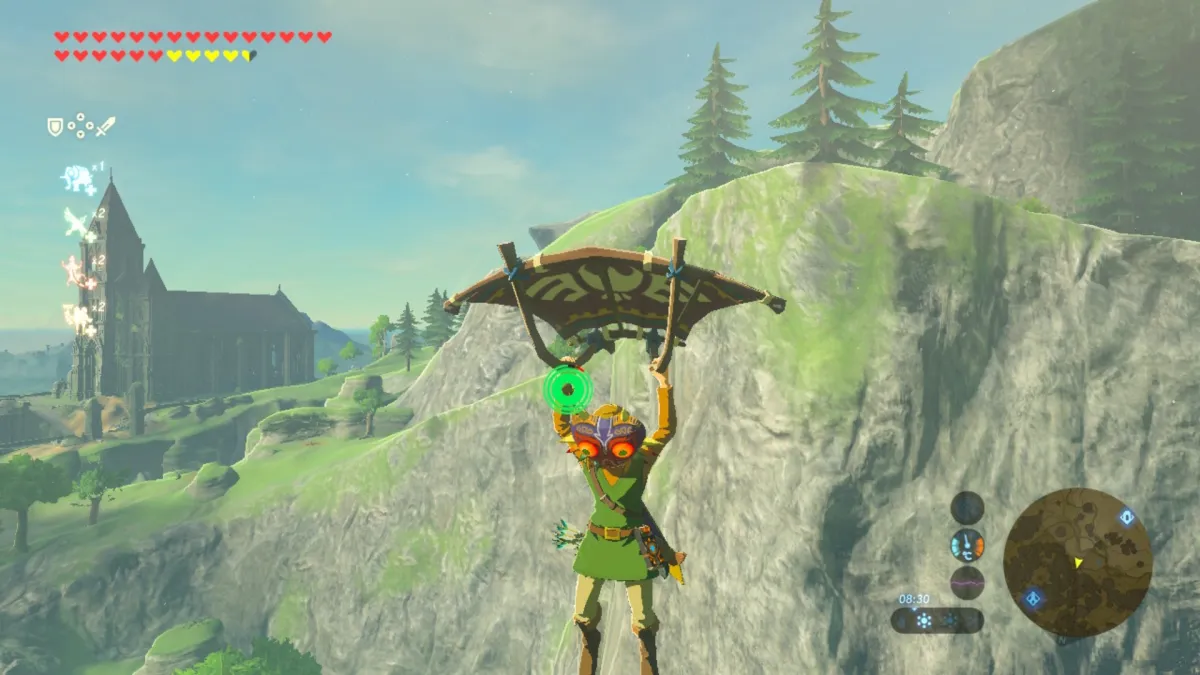 Photo: The Legend of Zelda: Breath of the Wild, via www.pockettactics.com
The Lost Art of Getting Lost
There's genuine value in the experience of being lost in a game world. It creates emotional investment in the environment, forces players to pay attention to their surroundings, and makes eventual discoveries feel earned rather than inevitable. Some of gaming's most memorable moments come from stumbling across unexpected content while trying to find your way.
But modern open-world games are terrified of letting players feel lost, even temporarily. Every major release includes multiple failsafe systems: waypoints, fast travel, objective reminders, and map markers that ensure players always know exactly where they are and where they're supposed to go next.
This safety-first approach eliminates the emotional highs and lows that make exploration meaningful. When discovery is guaranteed and navigation is automated, the act of exploration becomes mechanically empty.
The Indie Alternative
Smaller developers, unburdened by focus group data and completion rate metrics, have begun experimenting with waypoint-free design. Games like Outer Wilds, Subnautica, and A Short Hike prove that players will embrace navigation challenges when the world design supports organic exploration.
These titles succeed by creating environments that are inherently readable — where visual landmarks, environmental clues, and spatial relationships provide all the guidance players need. They trust players to be curious, observant, and capable of learning from their environment.
The Path Forward
The solution isn't to eliminate waypoints entirely, but to make them optional and design worlds that function without them. The best open-world games should feel navigable and engaging even with all UI elements disabled.
This requires a fundamental shift in design philosophy — from treating players as passengers who need constant guidance to treating them as explorers capable of curiosity and spatial reasoning. It means creating worlds with clear visual hierarchies, distinctive landmarks, and environmental logic that rewards observation.
Most importantly, it means trusting players enough to let them occasionally feel lost, confused, or uncertain. These moments of disorientation aren't bugs to be fixed — they're features that make eventual discovery meaningful.
The map isn't just lying to you about where to go next; it's lying about what exploration really means, and it's time the industry remembered the difference between navigation and discovery.