The Loadout Inheritance: Why Your First Gaming Genre Permanently Shapes Every Build You'll Ever Make
Every gamer has that one moment — the first time a build clicks, the first time you understand what it means to optimize your character, the first time you realize there's a method to the madness of stats and equipment. What most players don't realize is that this foundational experience becomes their gaming DNA, quietly influencing every loadout decision they'll make for the rest of their lives.
Whether you cut your teeth on the unforgiving stamina management of Dark Souls, learned to prioritize headshots in Counter-Strike, or mastered the delicate resource juggling of Final Fantasy, that first genre doesn't just teach you how to play — it rewires how you think about playing everything else.
The Psychology of Genre Muscle Memory
Dr. Sarah Chen, a cognitive psychologist who studies gaming behavior at UC Berkeley, calls this phenomenon "mechanical inheritance." Her research shows that players who master one genre develop neural pathways that become their default problem-solving approach across all games.
"Think of it like learning to drive," Chen explains. "Once you internalize the basics, you don't consciously think about checking mirrors or signaling turns. Gaming genres work the same way — the first one you truly master becomes your unconscious framework for approaching challenge and optimization."
This isn't just academic theory. Walk into any gaming community and you'll see the evidence everywhere. Souls veterans who obsessively manage stamina in games that barely use the mechanic. JRPG players who hoard consumables in shooters where health packs are infinite. FPS mains who default to glass cannon builds even when tanking would be more effective.
The FPS Inheritance: Speed Over Everything
FPS players carry perhaps the most distinctive genetic markers. Years of split-second decision making and twitch reflexes create a specific optimization philosophy: mobility and damage output trump everything else. These players instinctively gravitate toward high-DPS, low-defense builds across every genre they touch.
Take Elden Ring — a game that rewards patience and defensive play. Yet FPS-trained players consistently choose the most aggressive weapons and light armor, even when the game's mechanics actively punish that approach. They'd rather dodge-roll through attacks than block them, treating every encounter like a high-stakes duel rather than a tactical puzzle.
 Photo: Elden Ring, via imgcdn.stablediffusionweb.com
This inheritance shows up in MMORPGs too. Former Call of Duty players overwhelmingly choose DPS classes in World of Warcraft, often struggling with support roles that require different thinking patterns. The muscle memory of "see enemy, eliminate enemy" doesn't translate well to healing rotations or crowd control management.
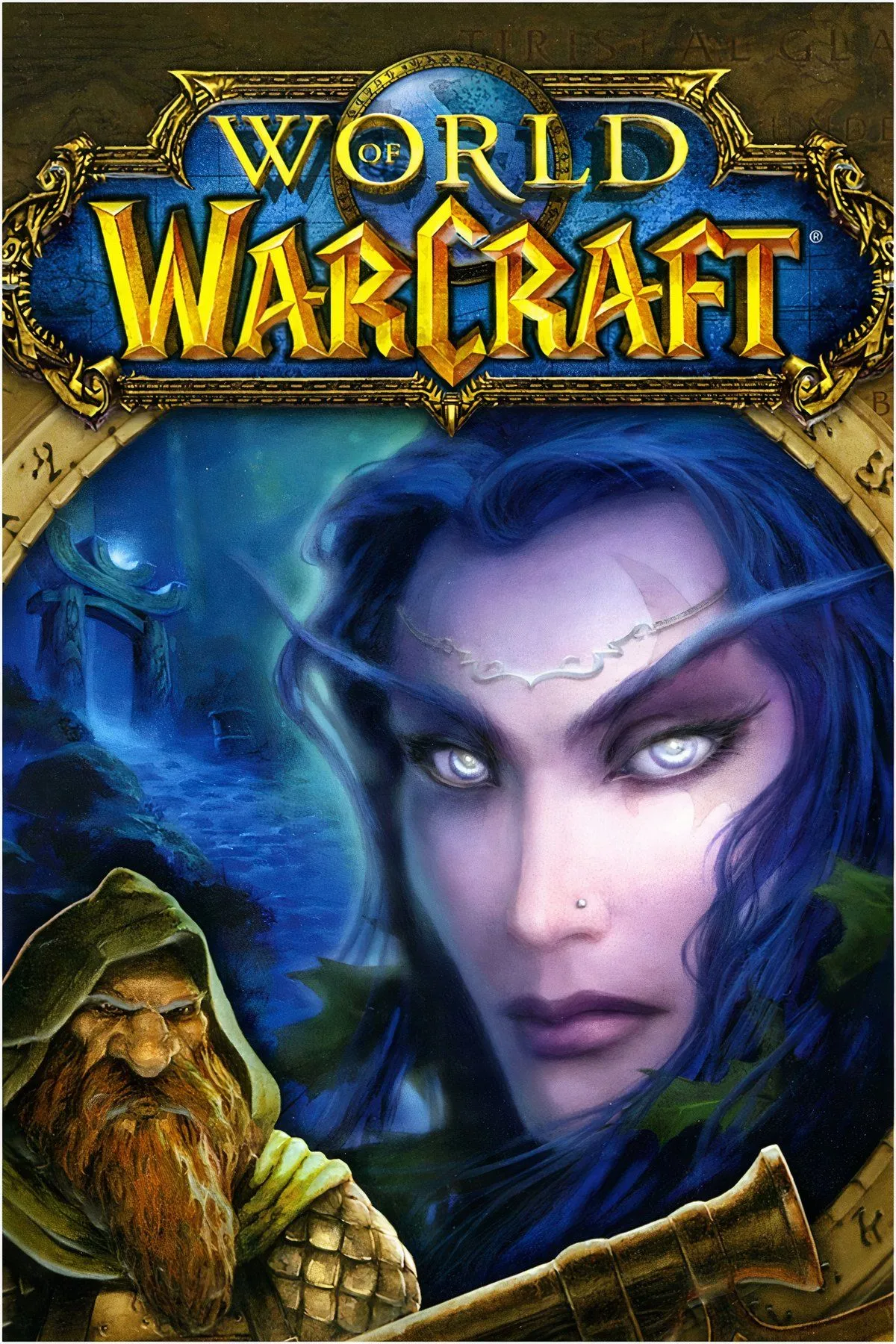 Photo: World of Warcraft, via static0.gamerantimages.com
The RPG Foundation: Numbers Don't Lie
Players who learned gaming through JRPGs or classic RPGs develop an entirely different inheritance pattern. They see every game through the lens of statistical optimization, often spending more time in menus than in actual combat. These are the players who will spend thirty minutes comparing two weapons that differ by three damage points.
In action games, RPG veterans often struggle with real-time decision making because they're mentally calculating damage-per-second ratios while enemies are actively attacking them. They'll pause mid-fight to consider whether switching weapons would provide a 2% efficiency gain — a habit that serves them well in turn-based combat but becomes a liability when reaction time matters.
This inheritance creates some fascinating quirks. RPG-trained players are more likely to complete games because they understand long-term progression systems, but they're also more susceptible to analysis paralysis in games with complex skill trees.
The Battle Royale Generation: Resource Anxiety
The newest form of gaming inheritance comes from battle royale players — a generation that learned gaming through scarcity and permanent consequences. These players exhibit what researchers call "resource anxiety," hoarding ammunition and consumables even in games where they're abundant.
Fortnite and PUBG veterans approach every game like it's their last life. They over-prepare for encounters, stockpile healing items, and avoid risky plays even when the game's design encourages experimentation. In single-player RPGs, they'll finish with inventories full of unused potions because the battle royale mindset treats every resource as potentially irreplaceable.
The Strategy Inheritance: Macro Over Micro
Real-time strategy players develop perhaps the most transferable inheritance pattern. Years of managing multiple systems simultaneously creates a unique ability to see games holistically rather than focusing on individual mechanics.
RTS veterans excel at live-service games because they understand meta-game thinking — how changes in one area ripple through entire systems. They're the players who correctly predict which weapons will be nerfed based on usage statistics, or which characters will become meta before the community catches on.
However, this macro focus can be a weakness in games that require micro-level execution. RTS players often struggle with fighting games or precision platformers because they're instinctively looking for larger patterns rather than focusing on frame-perfect timing.
When Inheritance Becomes Limitation
The dark side of loadout inheritance reveals itself when players become trapped by their foundational thinking. Souls players who refuse to use magic because it "feels like cheating." FPS veterans who won't play support classes because they're "boring." RPG purists who dismiss action games as "mindless."
Game designer Mark Chen (no relation to the psychologist) has seen this pattern repeatedly during playtesting. "We'll watch FPS players struggle with our puzzle mechanics, not because they're bad at puzzles, but because they're approaching them like shooting galleries. Their inheritance is actually preventing them from seeing the intended solution."
This limitation becomes most apparent in hybrid games that blend multiple genres. Destiny 2 struggles to satisfy both FPS and RPG players because each group approaches the game through their inherited lens, often missing what the other side values most.
The Designer's Dilemma: Building for Inherited Bias
Smart developers are beginning to design around these inheritance patterns rather than fighting them. Hades succeeds because it gives different player types multiple valid approaches — speedrun-focused paths for action players, build-crafting depth for RPG veterans, and narrative choices for adventure game fans.
"We stopped trying to teach players to play 'correctly' and started building systems that reward their natural tendencies," explains Hades designer Greg Kasavin. "If someone wants to play our roguelike like a fighting game, we make sure that's viable."
This design philosophy is spreading. Elden Ring succeeds partly because it accommodates both methodical Souls veterans and aggressive action players. Apex Legends works for both tactical FPS players and battle royale specialists.
Breaking the Inheritance Cycle
The question isn't whether loadout inheritance is good or bad — it's whether players can recognize and occasionally override their inherited biases. The most adaptable gamers learn to identify their default patterns and consciously experiment with alternatives.
Some players actively seek out genres that challenge their inheritance. FPS veterans who force themselves to play turn-based RPGs. Souls players who try party-based games where cooperation trumps individual skill. These genre tourists often discover new ways of thinking that enhance their primary gaming experience.
The Verdict: Superpower or Ceiling?
Loadout inheritance is simultaneously gaming's greatest strength and its most invisible limitation. It gives players a foundation for approaching new challenges but can also blind them to alternative solutions. The key is recognition — understanding that your first gaming love created a lens through which you see every subsequent game.
The smartest players learn to use their inheritance as a starting point rather than a final destination, recognizing when their default approach isn't serving them and being willing to experiment with alternatives. After all, the best loadout isn't the one that feels most familiar — it's the one that works best for the challenge at hand.