
The Great Disappearing Act
Nothing stings quite like logging into your favorite game only to discover that your meticulously crafted loadout has been "vaulted" overnight. One day you're dominating matches with your perfectly rolled Mountaintop grenade launcher in Destiny 2, the next it's been banished to the content graveyard, taking months of grinding and muscle memory with it.
This is the reality of modern live-service gaming, where developers routinely remove weapons, abilities, maps, and entire game modes in the name of "balance," "technical limitations," or "evolving the meta." What started as an occasional necessity has become an industry-wide practice that's fundamentally reshaping how players invest in their virtual arsenals.
The numbers tell a sobering story. Destiny 2 has vaulted over 200 weapons since 2019. Fortnite removes entire POIs and mechanics with each season. Apex Legends regularly cycles weapons in and out of the loot pool. For players who spend hundreds of hours perfecting their preferred playstyle, these decisions feel less like evolution and more like betrayal.
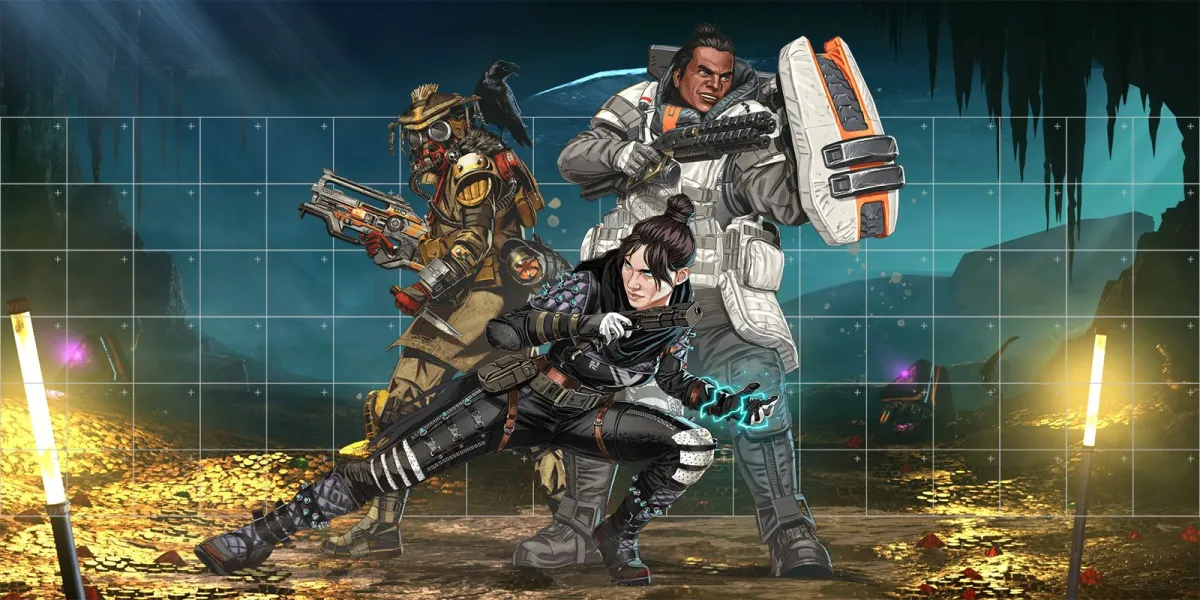 Photo: Apex Legends, via static1.srcdn.com
The Business Logic Behind the Graveyard
From a developer's perspective, vaulting makes perfect sense on paper. File sizes are exploding as games-as-a-service pile on content year after year. Destiny 2 would theoretically be over 300GB if Bungie hadn't removed older content. Apex Legends' weapon pool would be unwieldy with every gun ever released still in rotation.
"We have to make difficult decisions about what stays and what goes," explained a Bungie developer during a 2023 community stream. "Every weapon we keep means more testing, more balancing, more potential bugs."
The technical argument holds water, but it's the unstated business motivations that have players suspicious. Vaulting creates artificial scarcity, driving engagement spikes when beloved items return. It forces meta shifts that keep streamers creating content and players grinding new gear. Most cynically, it can drive microtransaction sales when free alternatives get removed.
EA's approach with Apex Legends exemplifies this strategy. The publisher routinely vaults popular weapons like the R-99 SMG or Wingman pistol, only to bring them back as "exciting returns" during major events. Player engagement metrics consistently spike during these comeback periods, validating the rotation strategy from a business standpoint.
The Hall of Shame: Gaming's Most Controversial Vaults
Some vaulting decisions have achieved legendary status for all the wrong reasons. Destiny 2's removal of the Red War campaign didn't just delete weapons — it erased the entire narrative foundation that brought millions of players into the franchise. New players literally cannot experience the story that established the game's universe.
Fortnite's decision to vault the beloved Pump Shotgun in 2019 sparked such outrage that Epic Games brought it back within a single season. The community reaction was so visceral that "Vault the Combat, Unvault the Pump" became a rallying cry across social media platforms.
But perhaps no vaulting decision has been more controversial than Bungie's removal of the Whisper of the Worm mission from Destiny 2. This wasn't just a weapon — it was a masterpiece of level design that players had discovered through community effort and solved through collaboration. Removing it felt like burning down a digital landmark.
The Community Strikes Back
Player tolerance for vaulting has reached a breaking point. Reddit communities dedicated to "sunset" weapons maintain active user bases years after their removal. YouTube creators build entire channels around vault criticism. The #BringBackSRL hashtag for Destiny's Sparrow Racing League has persisted for over five years.
More importantly, players are voting with their wallets. Steam reviews for Destiny 2 consistently cite content removal as a primary complaint. Apex Legends faces regular review bombing when popular weapons get vaulted. The message is clear: players are tired of their investments disappearing.
The most organized resistance comes from the "Digital Preservation" movement within gaming communities. These players argue that vaulting represents a fundamental breach of the implicit contract between developer and player. When someone spends 100 hours grinding for a perfect weapon roll, the expectation is that investment will retain value.
Signs of Change: The Developer Response
Faced with mounting criticism, some developers are reconsidering their approach. Bungie has committed to bringing back vaulted Destiny 2 destinations, starting with the return of King's Fall raid. Epic Games now provides advance notice before major vaults and has implemented "Legacy" modes that preserve older content.
The most promising development is the rise of rotation systems over permanent vaulting. Instead of deleting content, developers are creating seasonal pools that cycle items in and out of availability. Apex Legends' "Care Package" system exemplifies this approach — powerful weapons get temporarily removed to the care package loot pool rather than deleted entirely.
Some studios are going further. Riot Games has pledged that Valorant will never permanently vault weapons, instead relying on balance changes to manage the meta. This represents a philosophical shift: accepting complexity rather than artificially limiting it.
The Path Forward
The vaulting controversy has exposed a fundamental tension in live-service design. Developers need flexibility to evolve their games, but players need stability to justify their investment. The solution likely lies in compromise rather than absolutes.
The most player-friendly approach involves transparent communication, advance warning, and genuine rotation rather than permanent removal. When Halo Infinite removes a weapon from ranked play, it remains available in other modes. When World of Warcraft updates its talent system, legacy servers preserve older versions.
Ultimately, the loadout graveyard exists because developers prioritized convenience over community trust. As the backlash intensifies and competition increases, the studios that figure out how to evolve without alienating their most invested players will have a significant advantage in the live-service landscape.
The question isn't whether vaulting will continue — it's whether developers will learn to do it in a way that respects the time and emotional investment players put into their virtual arsenals.