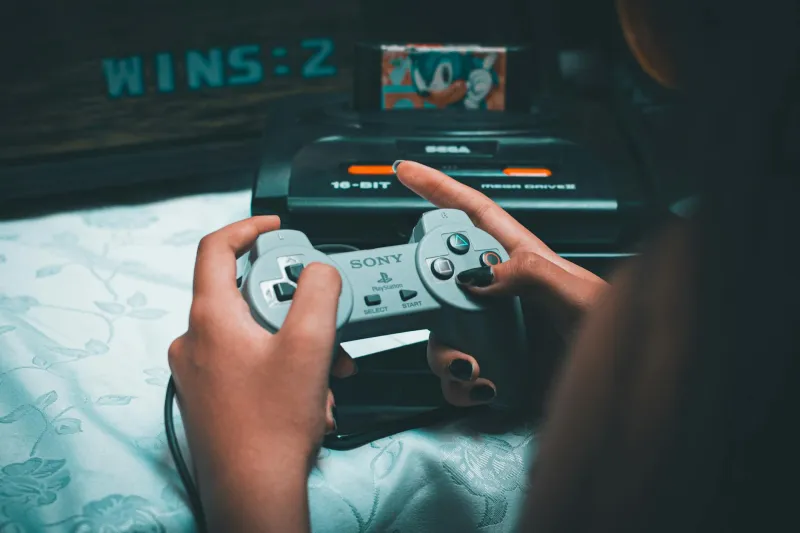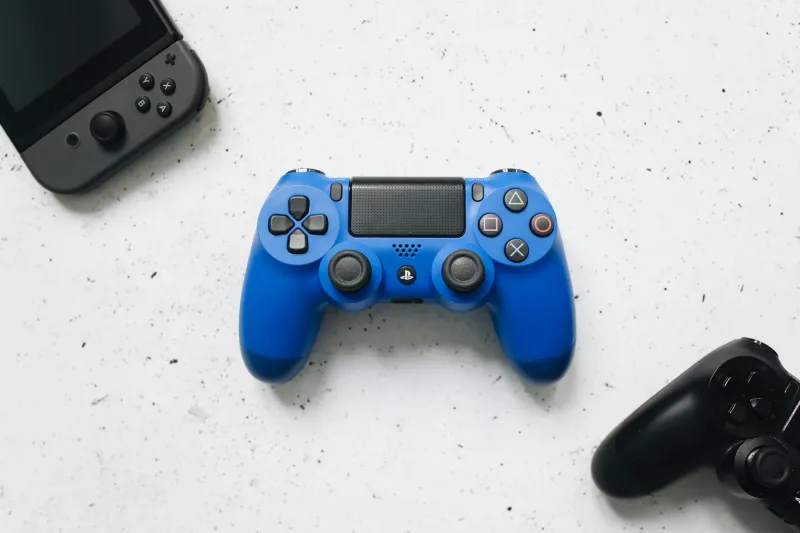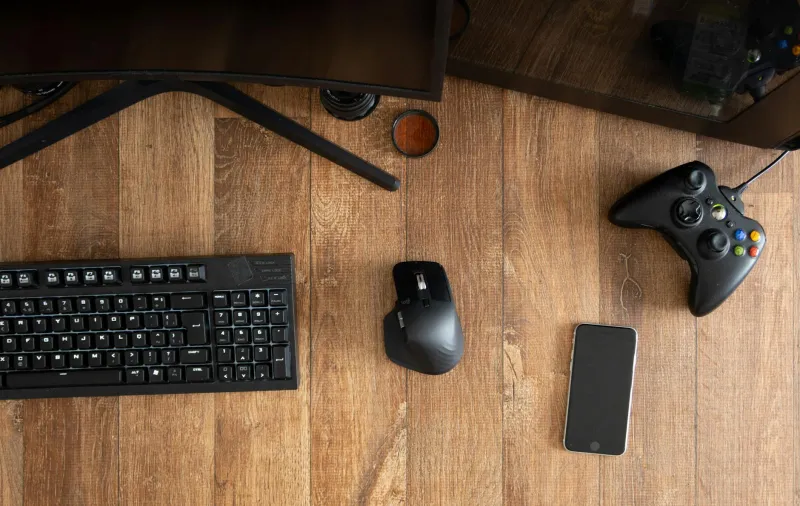
When Fortnite introduced cross-platform play in 2018, it was hailed as gaming's great unifier. PC, console, and mobile players could finally compete in the same arena. But beneath the celebration lay an uncomfortable truth: not all inputs are created equal. Four years later, the controller versus mouse-and-keyboard divide has become gaming's most persistent competitive inequality — one that affects millions of players daily.
The numbers don't lie. In Apex Legends ranked play, mouse-and-keyboard users achieve 23% higher accuracy rates than controller players at equivalent skill levels. Valorant's competitive ladder shows similar disparities, with controller users requiring 15% more shots to secure eliminations. Even with aim assist — the controversial software assistance designed to level the playing field — console players consistently underperform in cross-platform environments.
The Hardware Reality Check
The fundamental issue isn't skill or dedication — it's physics. A computer mouse can achieve pixel-perfect precision across a large movement area, while analog sticks operate within a constrained circular range. This limitation becomes critical in competitive scenarios requiring rapid target acquisition or micro-adjustments.
Consider the mechanics of a typical engagement in Call of Duty: Warzone. A mouse user can instantly flick between targets 180 degrees apart, then make minute adjustments for headshot accuracy. A controller player must choose between high sensitivity for quick turns (sacrificing precision) or low sensitivity for accuracy (sacrificing speed). It's a hardware-imposed compromise that mouse users never face.
Professional player Marcus "MrSavage" Myrlund, who switched from controller to mouse-and-keyboard in 2019, described the transition bluntly: "It was like upgrading from a bicycle to a motorcycle. The ceiling for improvement was suddenly visible where it hadn't been before."
 Photo: Marcus "MrSavage" Myrlund, via kulturaktiebolaget.imgix.net
The Aim Assist Controversy
Developers have attempted to bridge this gap through aim assist — software that subtly adjusts controller aim when targeting enemies. But this solution creates new problems. Set too low, and controller players remain disadvantaged. Set too high, and mouse users complain about "artificial" assistance.
The controversy reached a boiling point during the 2023 Call of Duty League season, when several professional mouse-and-keyboard players publicly criticized aim assist strength. "Controller players are getting computer assistance in a skill-based competition," argued FaZe Clan's Ian "Enable" Wyatt. "That's fundamentally unfair."
Controller advocates pushed back, pointing out that aim assist merely compensates for hardware limitations rather than providing genuine advantages. The debate highlighted a central tension: is equality about identical tools or equivalent outcomes?
Community-Built Solutions
While developers debate policy, the community has developed practical workarounds. Controller players have discovered specific sensitivity curves, deadzone settings, and response configurations that maximize their hardware's potential. These optimizations aren't officially documented — they're community secrets, passed through Discord servers and Reddit threads.
One breakthrough came from "Genburten," an Apex Legends professional who achieved top-tier performance on controller through unconventional settings. His configuration — featuring linear response curves and minimal deadzones — became a template copied by thousands of players seeking competitive parity.
 Photo: Genburten, via prosettings.net
Similarly, Fortnite's controller community developed "legacy settings" that provided more responsive aim assist before Epic Games removed them in 2020. The backlash was immediate and sustained, with many controller players arguing that the changes effectively excluded them from competitive play.
The Hardware Arms Race
High-end controller manufacturers have recognized the competitive demand, developing premium devices that narrow the input gap. Controllers like the SCUF Infinity4PS Pro and Xbox Elite Wireless Controller Series 2 offer adjustable tension, shorter trigger stops, and additional programmable inputs.
But even premium controllers can't overcome fundamental limitations. "I've spent over $1,200 on different controllers," explains Sarah Chen, a Diamond-ranked Valorant player who recently switched to mouse-and-keyboard. "Each one felt like a marginal improvement, but the ceiling was still visible. With a $40 mouse, I immediately felt the difference."
Platform-Specific Optimizations
Smart controller players have learned to exploit platform-specific advantages. Console versions of cross-platform games often feature different recoil patterns, damage models, or movement mechanics. These variations — initially designed to account for input differences — can be leveraged by knowledgeable players.
In Destiny 2, for instance, certain weapon archetypes perform differently on console versus PC. Hand cannons have reduced range on console to account for aim assist, but pulse rifles maintain identical stats. Savvy controller players gravitate toward weapons that aren't penalized by their platform, effectively building loadouts around their input method.
The Competitive Divide
The input disparity has created informal segregation within competitive communities. Many high-level tournaments now feature separate divisions for controller and mouse-and-keyboard players, acknowledging that direct comparison isn't meaningful. This separation, while practical, reinforces the perception that controller players compete in a "lesser" category.
Streaming culture has amplified this divide. Popular content creators who use mouse-and-keyboard often showcase gameplay that's simply impossible on controller — rapid 180-degree turns, pixel-perfect tracking, instant target switching. These displays, while impressive, set expectations that controller players can't meet regardless of skill level.
Developer Responses
Some studios have acknowledged the input disparity and taken corrective action. Respawn Entertainment regularly adjusts aim assist strength in Apex Legends based on performance data. Epic Games experiments with input-based matchmaking in Fortnite. But these solutions remain incomplete and controversial.
The challenge lies in balancing multiple competing interests: controller players want competitive parity, mouse users want skill-based outcomes, and developers want unified player bases. No solution satisfies everyone, leading to ongoing tension and frequent policy changes.
The Mobile Wild Card
Mobile gaming has introduced a third input method to the equation, with touch controls creating their own unique advantages and disadvantages. Some mobile players have achieved surprising success in cross-platform competition, particularly in games like PUBG Mobile and Call of Duty Mobile.
This success stems partly from mobile-specific features — gyroscope aiming, customizable HUD layouts, and aggressive aim assist — that partially compensate for touch control limitations. However, mobile players still face significant disadvantages in games designed primarily for PC and console.
Looking Ahead
The controller handicap won't disappear through software updates alone. The fundamental physics of analog stick movement versus mouse precision creates an unbridgeable gap that affects millions of players daily. Recognition of this reality is growing, with more developers implementing input-based matchmaking and separate competitive tracks.
For individual players, the choice is increasingly clear: accept the limitations and optimize within them, or make the switch to mouse-and-keyboard. Neither option is ideal, but both represent honest acknowledgments of competitive reality.
The gaming industry promised that cross-platform play would unite players across all devices. Instead, it revealed that hardware choices carry competitive consequences that no amount of software assistance can fully eliminate. The controller handicap isn't a bug in the system — it's a feature of how different input methods interact with precision-demanding gameplay.
Until someone invents a controller that matches mouse precision or a mouse that fits console ergonomics, millions of players will continue competing with one hand tied behind their back — and finding creative ways to succeed anyway.