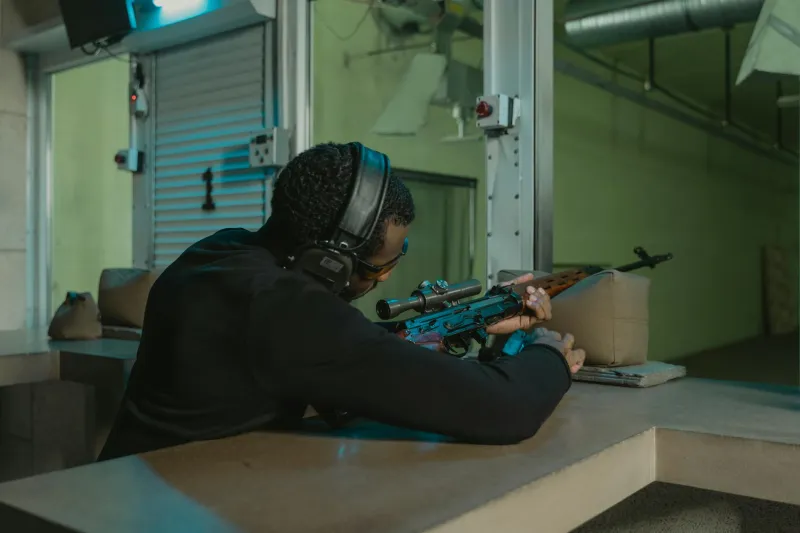
Load into any major competitive shooter today, and you'll witness a phenomenon that should theoretically break the entire progression system. Watch a Diamond-ranked Valorant player clutch a round with the Vandal — the same rifle they were using 500 hours ago as a Bronze. Observe a Call of Duty veteran dominating lobbies with an M4A1, a weapon unlocked before they hit level 10. Check the loadouts of Halo Infinite's Onyx players, and you'll find them gravitating toward the BR75 Battle Rifle, a gun that's been the backbone of the franchise since 2004.
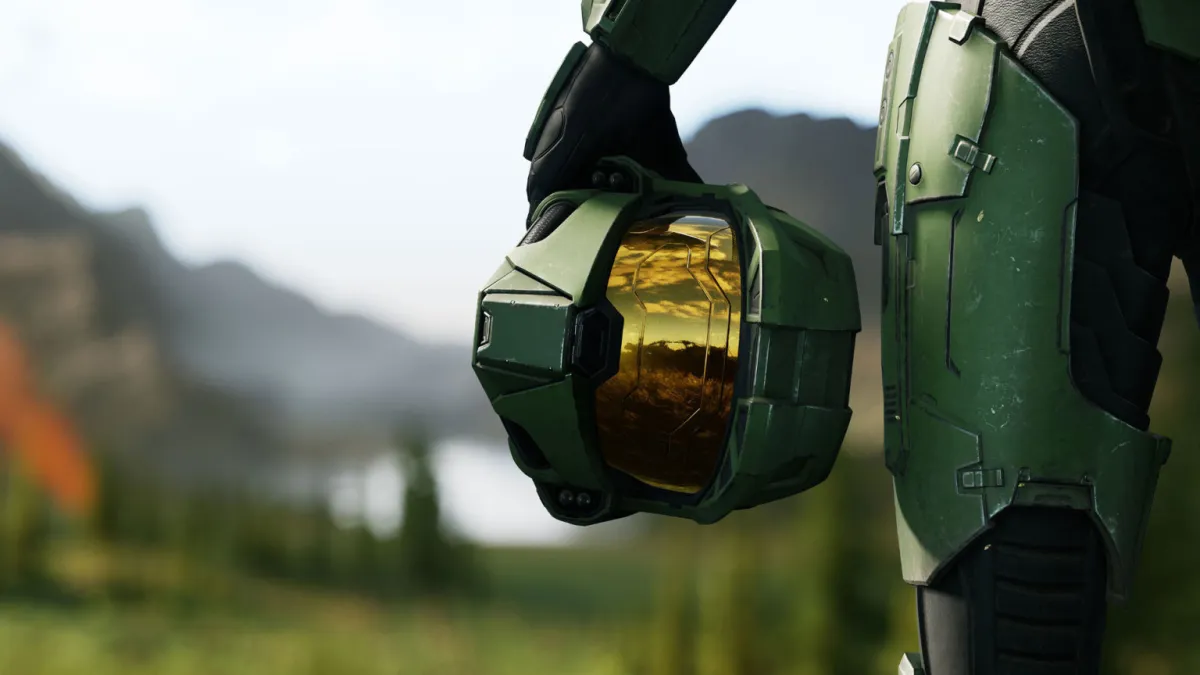 Photo: Halo Infinite, via assets.gamepur.com
This is the carry weapon paradox: in an industry obsessed with progression systems, unlock trees, and the dopamine hit of new gear, the weapons that matter most are often the ones you get earliest. And it's not an accident.
The Intentional Design of Evergreen Arsenal
Game developers have quietly perfected the art of creating starter weapons that don't become obsolete. Unlike RPGs where your starting sword becomes vendor trash within hours, competitive shooters are built around a different philosophy entirely. The AK-47 in Counter-Strike has remained fundamentally unchanged for over two decades, and it's still the weapon of choice for professionals earning six-figure salaries.
"We design our core weapons to have infinite skill ceilings," explains former Bungie designer Lars Bakken, who worked on the original Halo trilogy. "A novice player might spray and pray with the Battle Rifle, but a pro can cross-map headshot with the same gun. The weapon doesn't change — the player's mastery does."
This approach creates what developers call "horizontal progression" rather than vertical power creep. Instead of unlocking strictly better guns, players unlock different tools for different situations. The Vandal in Valorant isn't objectively superior to the Phantom — they serve different tactical roles. The M4 in Call of Duty isn't meant to be replaced by later unlocks; it's meant to be refined through attachments and player skill.
The Psychology of False Progression
But here's where things get interesting: most players don't realize they're experiencing horizontal progression disguised as vertical advancement. The unlock system creates the illusion of getting "better" weapons when you're actually just expanding your tactical options.
Take Call of Duty's weapon unlock structure. A new player might assume that a level 40 assault rifle must be superior to the starter M4. In reality, top-tier players often return to that M4 because its recoil pattern, damage profile, and handling characteristics are deliberately engineered to reward mastery. The later unlocks aren't upgrades — they're sidegrades with different learning curves.
"Players want to feel like they're progressing, but we can't break competitive balance," says a current Riot Games designer who requested anonymity. "So we give them new toys that feel different, but we make sure the fundamentals remain viable. The Vandal will always be competitive because it has to be."
The Skill Scaling Secret
The real genius lies in how these weapons scale with player improvement. A Bronze player might achieve a 15% headshot rate with Valorant's Vandal. A Radiant player with the same gun might hit 35%. The weapon hasn't changed, but its effective power has more than doubled through player skill alone.
This scaling is intentionally built into the weapon's design. High damage per shot rewards accuracy. Predictable recoil patterns favor players who invest time in mastering them. Fast time-to-kill punishes positioning mistakes but rewards tactical thinking. These aren't accidents — they're carefully calibrated systems designed to grow with the player.
Consider Halo's signature weapons. The Battle Rifle's four-shot perfect kill has remained consistent across multiple games, but the skill required to consistently land those shots creates a massive performance gap between casual and competitive players. Bungie didn't need to create a "better" Battle Rifle — they created one that becomes better as you do.
The Economics of Engagement
From a business perspective, this design philosophy serves multiple masters. Players feel rewarded by unlock progression while developers maintain competitive integrity. More importantly, it keeps the learning curve manageable for new players while preserving the depth that retains veterans.
"If we made starter weapons obsolete, new players would get destroyed even harder," explains the Riot designer. "Imagine trying to learn Valorant if pros were using weapons you couldn't access for 100 hours. The skill gap would become an equipment gap too."
This approach also extends the game's lifespan. When core weapons remain viable indefinitely, the meta stays dynamic. Players aren't chasing the next overpowered unlock — they're refining their mastery of tools they already understand.
The Attachment Illusion
Modern shooters have added another layer to this system through weapon customization. Attachments create the feeling of meaningful progression while often making minimal impact on a weapon's fundamental characteristics. That red dot sight on your M4 doesn't change its damage model, but it makes the gun feel personalized and "upgraded."
Call of Duty's gunsmith system exemplifies this perfectly. Players spend hours unlocking attachments for their favorite weapons, creating the sense of meaningful progression. But the base weapons remain competitive even without modifications. The attachments tune performance rather than transform it.
Breaking the Paradox
Some games have attempted to break free from this paradigm, usually with mixed results. Battlefield 2042's weapon unlock system initially tried to gate more powerful weapons behind significant progression barriers. Player feedback was overwhelmingly negative, and DICE eventually rebalanced the system to make starter weapons more competitive.
Escape from Tarkov represents the opposite extreme, where early-game weapons genuinely become obsolete as players progress. But Tarkov's hardcore audience expects this type of brutal progression curve — it wouldn't work in a mass-market competitive shooter.
The Future of Weapon Progression
As the industry evolves, expect to see more games embrace this horizontal progression model. The success of Valorant, Apex Legends, and modern Call of Duty titles proves that players don't need constantly escalating power to stay engaged. They need depth, mastery, and the satisfaction of improvement.
The carry weapon paradox isn't a flaw in game design — it's a feature. In a medium obsessed with bigger numbers and flashier unlocks, the most successful competitive shooters understand that sometimes the best progression system is one that makes the player better, not their gear.
After all, the deadliest weapon in any shooter isn't the one with the highest damage stat — it's the one in the hands of a player who knows exactly how to use it.